From the R2 billion Tembisa Hospital looting spree to punitive racial quotas that could bankrupt retailers, the government continues to simultaneously rely on business to fix state failures while treating the private sector as an enemy of the people, argues Tony Leon.
About a decade ago, I addressed a group of business leaders in Durban at the height, or depths, of Jacob Zuma’s predacious presidency.
His looting spree and callous disregard for constitutional guardrails and his shredding of basic governance were national in scope, though KwaZulu-Natal was its ground zero.
One of KZN’s most impressive young entrepreneurs and industrialists asked me a question that morning which still resonates today:
“Why does my government hate me?”
He elaborated on the hurdles of doing honest and efficient business: bribe demands from provincial entities, the vast array of compliance mechanisms, the racial census he was obliged to undertake of his workforce, the endless “requests” for “donations” to national and local projects, and the stuttering infrastructure that hobbled his ability to send goods to market, here and abroad.
Two years or so after this depressing dialogue, Jacob Zuma was ousted by his own party, and a new “reforming” administration was inaugurated in 2018, igniting hope that, at last, economic normalcy could ignite growth, business would get a look in – or at least an ear – from government and the country would be liberated from state capture.
So, how are we doing seven or so years on?
Perhaps the most depressing and revealing feature of the horror show unveiled on Monday on the “R2bn mafia style looting” at a single hospital in Gauteng (Tembisa) is its timeline: the conclusion of the Special Investigating Unit (SIU) into the spider’s web of sprawling corruption and corrosive procurement covers a period from April 2016 to August 2022. Note then that four of the six years of this feeding frenzy which robbed the state and suffering patients blind, was on the watch of the administration of Cyril Ramaphosa. Indeed, the tragic assassination of the brave whistleblower Babita Deokaran happened in August 2021 (three years after Zuma had been exiled to Nkandla).
With no exaggeration, Business Day for example, noted in its report: “The (Tembisa Hospital) scandal exposes the mockery of President Cyril Ramaphosa’s pledge to crack down on the corruption cancer corroding almost every level of government.”
Indeed, according to Professor Alex van den Heever of Wits, “close to R20 billion has been stolen from the Gauteng provincial health department” over the past 10 years. Most of it was not on Zuma’s watch.
Of course, Ramaphosa is not personally responsible – and doubtless had no knowledge – of Tembisa and other sites of extractive plunder, even if a family member though marriage sat at its centre. And on the credit side, the vigour of the SIU, by contrast with the overall hopelessness of the NPA (National Prosecuting Authority), is owed to presidential proclamation. Under Ramaphosa, these are freely granted, as opposed to Zuma’s filibustering.
Ongoing corruption
But the fact is, and Tembisa is sadly just one example, that criminalisation of both state and its procurement processes and the violence meted out to exposers of this rot has continued almost without let or hindrance. Long after Zuma left the presidency.
Back in Durban last weekend, the shattered KZN ANC (ironically humiliated in last year’s poll by Zuma and his racketeers) met to plot its path back to power in the province.
Beyond recycling former president Thabo Mbeki to restore its fortunes and the usual blather about disunity and suspect comrades, there was one remark which went to the heart of the party’s thinking on why South Africa sits with low growth, high unemployment and scant foreign investment.
ANC KZN head of “political education” Kwazi Mshengu earnestly advised a TV interviewer that “counter revolutionary forces are hard at work to destroy the party and the economy”.
He declined, on being pressed to do so, precisely who these termites are, shadowy forces of the counter revolution “hollowing out the state and its capacity”.
The usual suspects
While Mr Mshengu heads the school of reductive conspiracy theories, you can generously bank on the fact that among his “usual suspects” will be business and the private sector, the remaining pillar of a creaking country that has both the public’s confidence and the ability to right the listing ship of state.
On the one hand, government relies ever more on business, via Operation Vulindlela to fix the messes of its own creation or neglect, or even to fill government coffers for endless state projects from the G20 jamboree to the currently silent National Dialogue. Never mind the millions key business leaders poured into the CR17 presidential campaign.
On the other hand, there is, in key parts of the government and Cabinet machine, barely veiled contempt for the views, needs and operating and economic logic of running a business in today’s South Africa.
BUSA application
A glaring case in point is the recent application launched by Business Unity SA (BUSA) in the Labour Court against the employment equity targets mandated by the department of employment and labour. These relate to timeframes (or their lack), consultation (or its lack) and arbitrary demographic assumptions and the total disregard for specialisation and skills in what amounts to barely disguised racial quotas embedded in the “one size fits all” approach of the department.
The court papers make for depressing reading when it comes to a so-called inclusive and consensus-seeking government.
One mass retailer I spoke to shook his head and said: “Whoever dreamed these up has never run a business or even has an understanding of the difference between turnover and profit.”
Heavy fines
Among the penalties for “repeat and serious breaches” of noncompliance with the new racial pencil tests embedded in the new regulations is a fine of “up to 10% of turnover”. Since retailers and other sectors have tight margins where 3% of turnover is often the profit margin, offenders might as well close their businesses.
So much for the brave new world of business-government cooperation in the national interest.
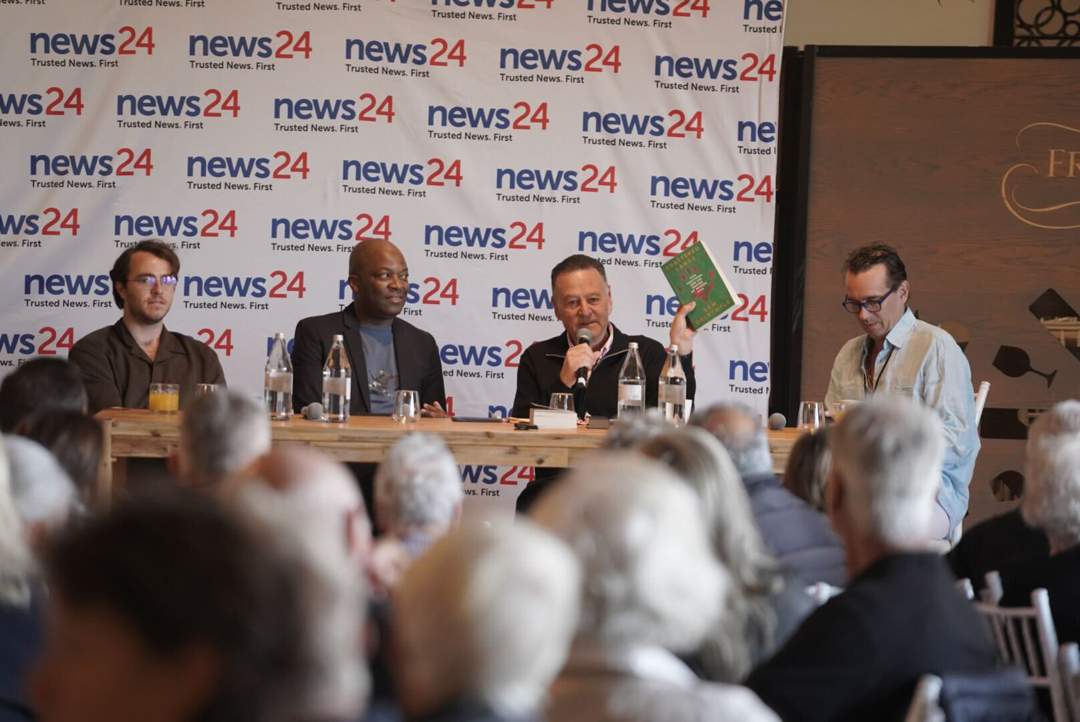
In Mandy Weiner’s new book on the negotiations that birthed the GNU, The Deal, there is an interesting, revealing interview with Ramaphosa himself.
Having been personally immersed in the negotiations (on behalf of the DA), I was directly aware of the pressures being applied by business leaders on all centrist parties to strike an accord to stave off financial and economic ruin in the event of a “doomsday pact” between the ANC and the Zumaites or the EFF. They had a lot of skin in the game, and their pressure, irritating and relentless at times, was understandable.
Ramaphosa and the ANC were also being pressured. Yet as he recounts to Weiner and reproduced in her book, he and the ANC had a very different view of business and their motivations at a decisive moment in the fraught negotiations.
Ramaphosa says:
“I remember clearly the one meeting I had with business. Interestingly, you know, dealing with the DA in many ways meant we were not only dealing with the DA, [but] we were also dealing with business… I also knew that they were firmly in the DA court. But more than that, and I told them this, that they were bad mouthing the country to other international players…”
He does make the obligatory disclaimer that indeed some business leaders might be “good citizens of the country” invested in good governance and democracy, but the direction of Ramaphosa’s intellectual travel is very clear: business and the DA have little independent agency, rather they were ganged up in a stitch-up against the ANC, never mind against the country as well.
Doubtless, this will come as news to both the DA and the business. But it does suggest that the school of reductive conspiracy theories is not confined to the provincial head of political education. It is in the highest reaches of the state.
The precise place that produced the madcap racial “targets” is now mandatory across all sectors (unless overturned in court).
In the 10 years since I was asked by a Durban business leader “Why does my government hate me?”, the answer today is not reassuring.