In a rare moment of political honesty that sent shockwaves through the ANC, President Cyril Ramaphosa told his councillors to learn from DA municipalities – only to quickly retreat when the uncomfortable truth about his party’s failures sparked internal fury and opposition glee, writes Tony Leon
There is evidence to suggest that most South Africans believe the truth behind the old joke:
Q: How do you tell when a politician is lying?
A: When his lips move.
For example, a 2023 SA Reconciliation Barometer highlighted the galloping decline in trust in local politicians: 79% of those polled believed that leaders couldn’t be trusted to do what’s right – a fourfold increase on the same question asked 20 years before, according to the report.
Citizen’s widespread cynicism and disillusionment with their rulers and the process that elects them was clearly revealed in the real election poll last year.
Of a universe of all potential voters, 12 million (or 30%) of the Eligible Voting Age Population (EVAP) didn’t bother to register for the election. On voting day itself, more than 40% of this shrunken voters’ roll never pitched to vote. The drop in turnout last year, the lowest in 30 years, at 58.6%, was a sharp decline from the 66% turnout in 2019.
The Election Commission of South Africa (IEC) can take a deep bow, with its incompetent mess up of both registration and election day processes for some of this decline. However, the vertiginous fall in popular participation owes a great deal to the vast gap between inflated political rhetoric and empty promises and the grim reality of failed services and stalled, corrupted or non-existent delivery.
Recently, more than a year before the next round of local government elections, the ANC supremo, Cyril Ramaphosa, delivered to his massed councillors a harsh or home truth or two. It’s appropriate to give him two cheers for his effort.
The first cheer is for him going off-script and not just offering his usual dose of what was dubbed “aural Valium” – or a soothing tranquiliser, destined by its disconnect from reality, to cause the audience to nod off and ignore the empty message laced by honeyed words.
Often his speeches and newsletters look like they have been cooked up in the AI fantasy kitchen of make-believe stuff from “smart cities” to “bullet trains” to trillions pouring in for investment, or even that SA is “open for business”.
This is in cities where, literally, the taps run dry. Or a country, the International Institute for Management Development (IMD), an international benchmark, rated 64th out of 69 countries surveyed for “competitiveness, business friendliness and governance and corruption” in its 2025 World Competitiveness Report.
Telling it like it is
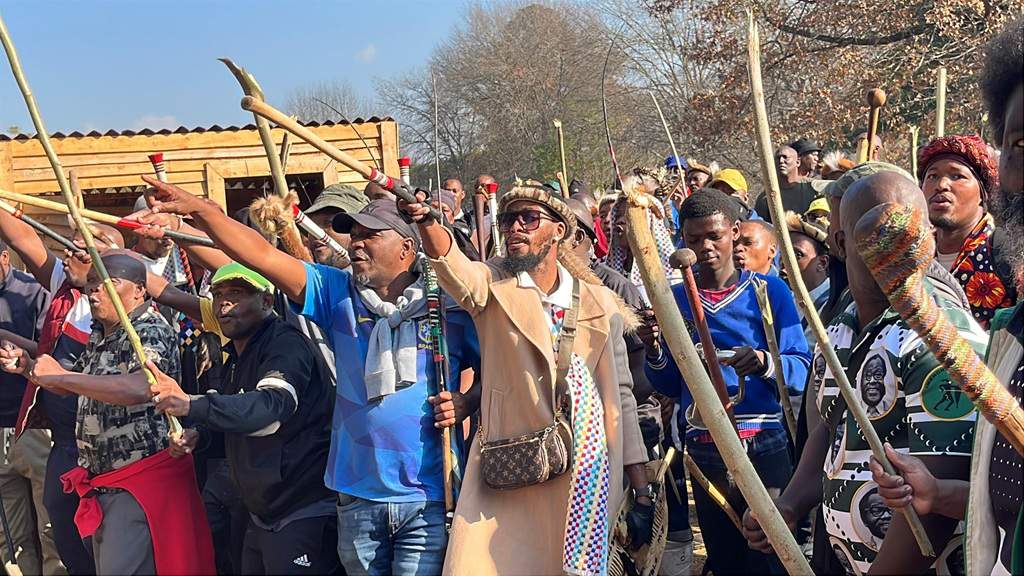
(In)famously, Ramaphosa flipped the script when he told his 4 600 ANC councillors gathered in Soweto to stop sleepwalking to electoral doom.
Rather, he suggested: “We need to ask ourselves what is it that the DA is doing that is better than what we are doing? And there is nothing wrong with us saying we want to see what Cape Town is doing. We want to see what Stellenbosch is doing.”
Since it is rare in either SA or indeed the world for a politician to confront their own comrades with a basic truth, especially in praise of their opponents, Ramaphosa deserves a second cheer for telling it like it is – unvarnished, even if it is widely known and experienced.
On occasion, political leaders offer discomfort to their own side, to spur improvement or galvanise a response that “business as usual” is not an option.
For example, former British prime minister James Callaghan, back when Britain had to go cap in hand to get an IMF bailout, offered his Labour comrades an uncomfortable truth on their free spending ways and the unsustainability of its public finances.
“Comrades”, he advised the party conference back in 1976, “we used to think that you could spend your way out of a recession and increase employment by cutting taxes and boosting government spending. I tell you in all candour that that option no longer exists.”
In 2008, Republican presidential candidate Senator John McCain did, by the debased Trumpian standards of today, an unimaginable thing amid a fierce election battle. He stood up for his Democratic opponent, Senator Barack Obama, and stared down the prejudice of his own supporters.
At a town hall rally in Minnesota just weeks before election day, one of his supporters said she could not trust Obama because he was an Arab.”
McCain took the mic from her and said: “No Ma’am. He is a decent family man; he is a decent person and a person that you do not have to be scared of as president.”
Leaving aside the clumsy non-sequitur in this response, the rarity of praising the character of your opponent at such a high-stakes moment was remarkable, even if the facts were self-evident.
A bit like Ramaphosa acknowledging publicly the self-evident fact that DA municipalities are better run than ANC local governments.
Confronting reality at a late hour
It will be cold comfort for Ramaphosa to know that both Callaghan and McCain went on to lose their respective elections. Precisely what local polls portend for Ramaphosa’s party in the 2026 local government elections. Cold truth often jibes against electoral calculation.
Though, as Nelson Mandela famously advised his comrades in the wake of the 1994 elections and widespread poll rigging in KwaZulu-Natal, “Tell the comrades to be prepared to lose. We will not say the election was not free and fair.”
Mandela’s basic instincts went on to inform and define his stellar presidency. Ramaphosa’s instinct until now, not to confront the truth and act accordingly, has crippled his presidency and incapacitated the country. And now, at a late hour, he confronts reality and moves his party out of its comfort zone, his circling internal enemies and gleeful political opponents pounce on him.
One ANC insider said, “he has checked out and is in the departure lounge”. And the DA parades him in blue T-shirt. The Surve-Star newspaper, in a subtle red banner headline declared, “Cyril Sells the ANC to the DA”.
Ramaphosa’s retreat
You would think perhaps that having delivered such an obvious truth to the comrades, and taking some stick for it, Ramaphosa would stick to his message and not tread on it.
But in now characteristic form, he retreated. Thus, he doesn’t get the traditional third cheer. Rather than doubling down on his candid counsel, he “clarified” his words. He backtracked on his original speech telling a (very rare) interviewer on SABC that despite DA governments having clean audits, “from a transformation point of view they are not [meeting the mark]. And a number of ANC municipalities meet the mark”.
Happily, he did not name the “transformed” local governments he had in mind – since for most residents in ANC areas, the transformation experienced has been a levelling down and shared misery of potholed streets, empty taps, looted coffers and forced privatisation (for those who can pay) of local services.
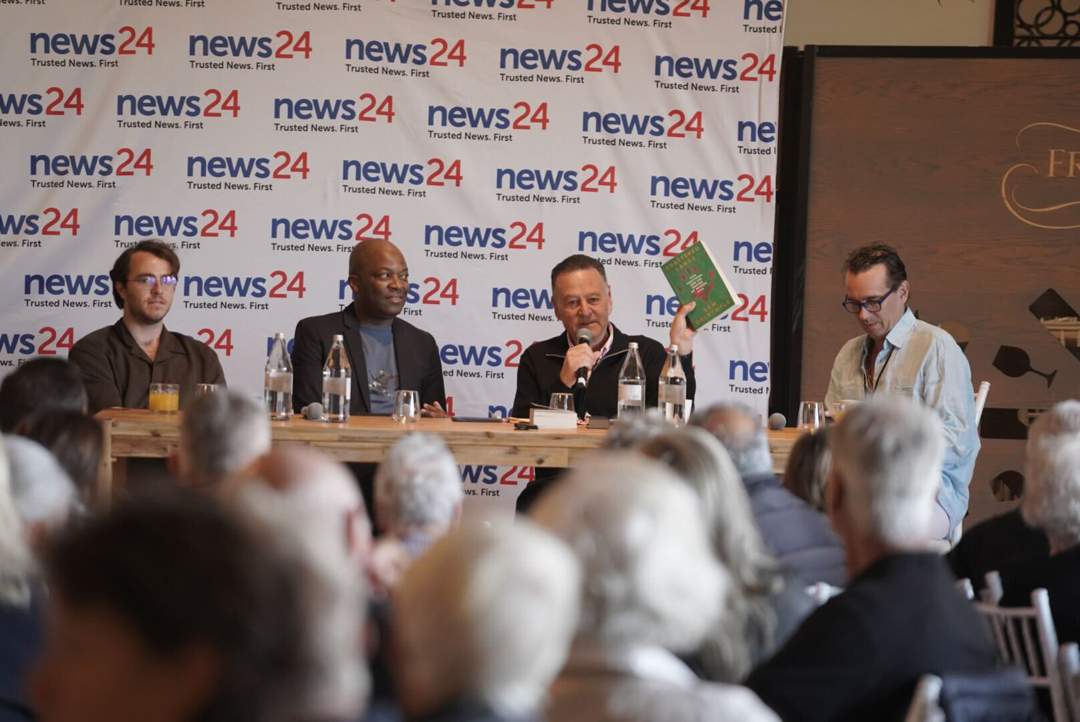
While controversy swirls around the Ramaphosa speech and his retreat, Harvard polymath Steven Pinker just published a new book, When Everyone Knows That Everyone Knows.
This “fizzling erudite book”, enthusiastically reviewed by The Economist, among others, last week, has nothing to do with South Africa, but draws its inspiration from the famous Hans Christian Anderson story, The Emperor’s New Clothes. Two swindlers sell the almighty ruler invisible threads claiming that their fine cloth cannot be seen by incompetent fools. “Not wanting to seem foolish, the emperor, accompanied by his fawning entourage, parades naked in public and the obsequious crowd cheer his new elegance.”
But it takes a lone child in the crowd, unburdened by political correctness or social pressure, to shout out the obvious, “But he is naked, he’s got nothing on.”
As Pinker explains and as his title suggests, “By blurting out what every onlooker could see within earshot of the others, the boy ensured that they now knew that everyone else knew what they knew [and] that everyone knew that everyone knew… And that changed their relationship to the emperor, from obsequious deference to ridicule.”
Ramaphosa’s rare exercise, at his councillors’ roll call, of blurting out the obvious truth will, I reckon, despite push back and walk back, prove a fundamental turning point. Except in our story, it was the emperor himself, not the little boy, who pointed out who was naked.