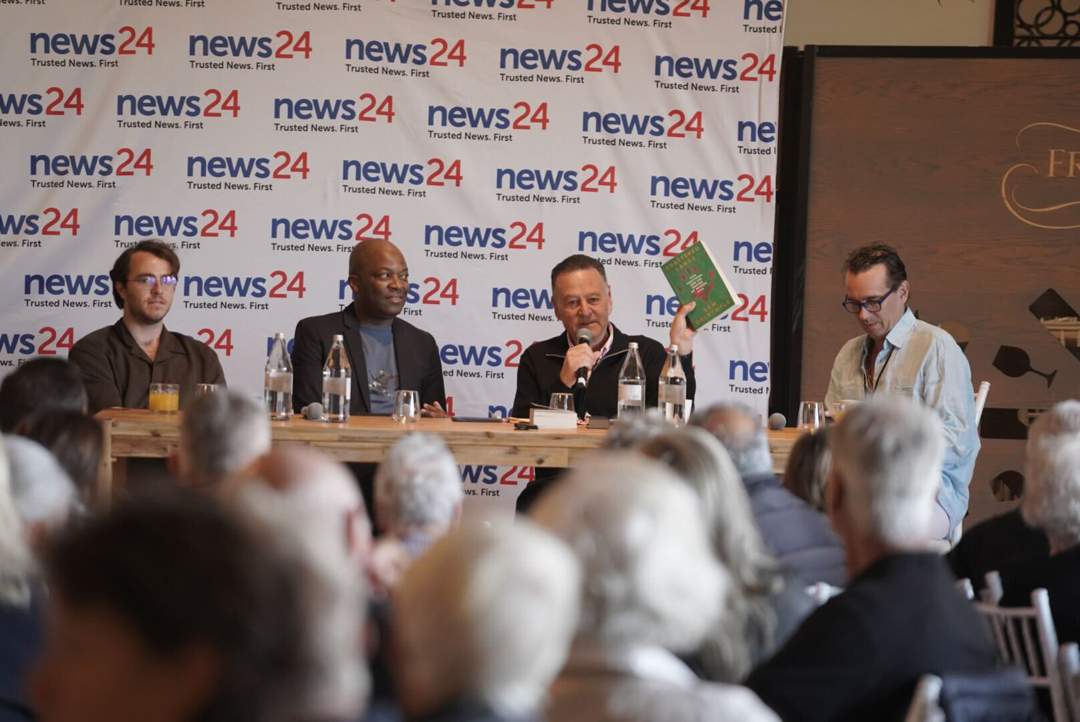
To draw a parallel between Bell Pottinger and the ordinary, transparent work of helping a lawful business make its case to the government is not just inaccurate – it is a malicious inversion of the truth so complete that it should give every citizen pause, writes Tony Leon.
Given his appalling popularity ratings and his party plotting his ouster, there was something classy about the departure note sounded by exiting UK Prime Minister Sir Keir Starmer.
Starmer, forced out as Labour leader and country premier barely two years after returning his party to power after a 14-year absence, said:
“I will give my successor my full and unequivocal support, knowing that they will inherit a Britain that is far stronger than the one I inherited two years ago… I will do everything I can to ensure an orderly handover of power.”
Grace notes to the person – Andy Burnham – who plotted against Starmer and who will succeed him, might be passed off as normal conventions of British hypocrisy. Or speak to the character of the speaker.
I exited party leadership here 19 years ago and left it to my successors to pilot and pivot the party as they deemed fit. The fact that I served as leader of the opposition features every week as a footnote to this column. Also plainly stated is the fact that I chair a communications company, whose details are easily ascertainable from its website. One of its tasks is the management of public affairs.
Yet some would believe that there is some grand conspiracy afoot. This has gained some currency in our public discourse: namely, that when any business speaks to government, something sinister is in play. That the very act of a company explaining to a minister, an official or a regulator is, in itself, a kind of corruption. It is an idea that is not only wrong but also dangerous. Those of us who have spent our lives in and around the project that is our constitutional democracy have a duty to say so plainly.
Crowding out reality
Let me begin with what public affairs actually is, because the caricature has lately crowded out the reality.
In every functioning democracy on earth, governments make decisions that profoundly affect the lives of citizens, the fortunes of businesses, workers and entire industries.
SA, not alone in the world, has chosen the path of heavy state regulation as opposed to the less interventionist approach. Ironically, and though leading a socialist party, Starmer, on entering Downing Street in July 2024, promised “government will tread more lightly on your lives”. One of several unfilled promises.
Any decision of government, in SA, the UK and around the world, is better informed when they are well informed. And they are well-informed when the people affected by them – companies, trades unions, farmers, professional bodies, civil society NGOs – can put their case to those in power, openly and on the merits.
This is not a flaw in the system. It is the system. It is how an open society distinguishes itself from a closed one, where access flows to the connected and the concealed.
Public affairs practitioners exist to make that conversation work. We – and there are many such private sector companies in the field – help organisations understand how government functions, who is responsible for what, and how to make their case clearly and credibly. We arrange meetings. We draft submissions. We marshal evidence. We advocate.
What we do not do, what we cannot do, is make or dictate the decision. That power rests, as it must, entirely with the elected representatives and public officials, who remain free to say yes or no, and who answer to the public and the law for the choices they make.
Consider what this looks like in practice, away from the abstractions.
When foot-and-mouth disease tears through the national cattle herd, it is farmers, farm workers and the organised agri-sector who must be able to reach government quickly, to argue for the vaccination strategy that the science demands. When they cannot be heard, or vaccines arrive too slowly or not at all, herds are lost, rural workers lose their jobs, and a crisis metastasises across entire communities and the country.
When our agricultural sector – and other industries – face the threat of closed markets or swingeing tariffs abroad, it is industry bodies who must engage government to keep those markets open because if they fail, fruit and vegetables rot on the docks, farms go under, and tens of thousands of farm workers lose their incomes.
The working machinery of democracy
Likewise, when a new piece of legislation threatens to extinguish an entire industry, businesses and worker representatives are entitled to come forward and say so, before the law has been passed, not after the damage has been done.
This is the unglamorous and essential machinery of a working democracy. It is how the concerns of the governed reach those governing. To describe it as illegitimate is to argue, in effect, that government should make decisions in ignorance of those they affect, or that government-business interactions be confined to showpiece rallies. No one who has thought seriously about how a country is run actually believes that.
This brings me to the more troubling development enjoying some ventilation right now.
Recently, legitimate advocacy has been deliberately conflated with something that is its precise opposite: state capture and the work of firms like Bell Pottinger. This is not a careless confusion. It is a rhetorical sleight of hand, and it deserves to be detailed and distinguished.
State capture was the systematic subversion of public institutions for private criminal enrichment. It involved the looting of state-owned enterprises, the corruption of law-enforcement agencies and the deliberate bending of the constitutional order to serve a connected few. Bell Pottinger, for its part, was retained to promote and inflame deeply damaging racial division in the country. And to create a fictional enemy to distract from that looting. It did not inform any public debate; it poisoned it. It did not bring the truth to government; it manufactured lies for money. Bell Pottinger was correctly destroyed for this.
To draw a parallel between that and the ordinary, transparent work of helping a lawful business make its case to government is not merely inaccurate. It is a malicious inversion of the truth so complete that it should give every citizen pause. The defining characteristics of state capture were concealment, criminality and subversion of process. By contrast, the defining feature of legitimate public affairs is lawfulness and respect for process – including the absolute principle that the decision is never ours to make.
The two, state capture and public affairs, are not on the same spectrum. They are opposites. One corrodes democracy; the other is part of what makes democracy function. Conflating the two might serve some or other agenda in the moment, but over time it does a profound disservice to those people and institutions who suffered under the real thing. And those who often, at great personal cost, sought to expose it.
I have spent the better part of my life defending the institutions of democracy and played some role in creating them – at the Codesa and more recent GNU negotiations, in Parliament, and as leader of the official opposition. I hold no public office today and wield no public power.
What I do, alongside many others in a recognised and necessary profession, is help legitimate enterprises participate in the democratic life of the country. In the open, on the record and within the law. There is nothing to apologise for that. There is, in fact, a great deal to defend.
We should be deeply wary of politics that seeks to delegitimise the act of engaging government at all. Because a country in which business, labour and civil society are told that speaking to those in power is inherently suspect does not birth a more ethical country. It creates a poorer, more closed and less democratic one.
We have seen the results of this approach in our own history. We know where it leads. We should decline to take a single further step down that road.