While Cyril Ramaphosa traded shame and fury in Parliament over SA’s jobs catastrophe, three of the world’s foremost historians gathered in Franschhoek to offer the kind of honest reckoning our leaders refuse to have with themselves, writes Tony Leon.
Two sobering insights were offered last week on the state of SA Inc.
Last Tuesday, the Quarterly Labour Force Survey made grim reading: 350 000 jobs simply disappeared in the first three months of 2026, 73% of which were once held by young people.
According to economist Duma Gqubule, there are now 13 million unemployed people in SA, where the real (or expanded) joblessness rate has crested at 43.7% of working-age people.
Gqubule, who argues from the left, wrote in Business Day: “The government has been hallucinating and telling us that the economy has turned the corner. It has also gaslit those who questioned the narrative, which did not have any real data points to back it up.”
Just two days after this job-killing report was published, Cyril Ramaphosa in Parliament reminded us that government gaslighting pesky questioners was an ecumenical affair.
Heedless of whether critics were from left, right or centre, no proper debate on the policies which have landed SA in the ditch of despair will be entered into. Or the price of admission will be to question the good faith of the questioner.
False, lies and just a slogan
When DA MP Toby Chance asked Ramaphosa when the government intended to end BEE, arguing it was a brake on both growth and investment, the presidential response was both furious and racialised. He retorted that any such suggestions were ‘false’, ‘lies’ and ‘just a slogan’. And indeed, reeked of bad faith.
If, the president averred, any suggestion BEE is a growth suppressor, then “you should hang your head in shame”. The shame in his reading is that opponents of BEE simply want white people to continue to control the economy. Presumably, this includes such well-known white supremacists as Moeletsi Mbeki and William Gumede, both arch critics of BEE.
Beyond rhetoric and name-calling, any evidence on offer from the president was vanishingly thin. He cited the mining industry as Exhibit A of the power of transformative policies, but did not explain how it has witnessed the disappearance of over 130 000 jobs since 1994, many of which are due to ageing mines and cost pressures, factors that alone cannot explain the phenomenon.
For example, today, SA, on the president’s party watch, receives less than 1% of global exploration expenditure. This is almost entirely due to the hostility engendered by bad policy and regulatory overreach.
Less growth than Zuma
But why confine the example to mining? Overall, the unemployment rate has gone up 50% since 1994, and as commentator Ryan Coetzee noted, Ramaphosa has “no shame in achieving less growth than Jacob Zuma did”.
Of course, accusing bona fide critics and opponents of malign motive or shamelessness avoids taking a long and honest look in the mirror and the head of state asking, “what did we do wrong” and “how can we fix it?”
Last week’s presidential rhetoric did not provide an answer. But in the more rarified environs of the weekend Franschhoek Literary Festival (FLF), I asked questions of this sort and got some proper answers from a trio of experts who have closely studied history.
Francis Fukuyama is presented as the “end of history guy” whose 1989 article and later bestselling book The End of History and the Last Man is an expression of naïve liberal triumphalism after the fall of the Berlin Wall.
Instead, as he explained, no one who advanced this critique had actually read the book beyond the title. Indeed, close reading of Fukuyama shows that there are different ways in which liberal democracy (and in this regard, SA’s Constitution is a liberal democratic instrument) “might break down in the future”. And history itself, rather than ending, has simply paused on its way to an uncertain future.
I asked Fukuyama to pinpoint whether SA was a good example of a country where, in his experience, like Afghanistan and Iraq, “creating a modern, effective state is a much more difficult task than creating a democracy”. Fukuyama, who has looked at SA since the 1980s, responded that indeed voting and elections are the easy part, but providing proper services, effective law enforcement and widening and shared prosperity are the hard yards often never achieved by newly democratised states.
Defending existing interests
In context of the BEE debate, it is worth reprising Fukuyama’s view on why governments stick to the dead carcass of failed policies.
In Political Order and Political Decay, he argued that often democracies drift toward what he calls “repatrimonialisation”, or where organised interests defend existing arrangements, even where they no longer work. As he explained, “politicians fear the backlash from those who benefit from the status quo”.
Cue here the trade union barons who benefit from job-crushing labour laws, the tenderpreneurs who benefit from preferential racialised procurements and the cadres who benefit from state deployment.
In other words, “once a policy becomes morally or politically symbolic, admitting failure can appear as weakness or betrayal”.
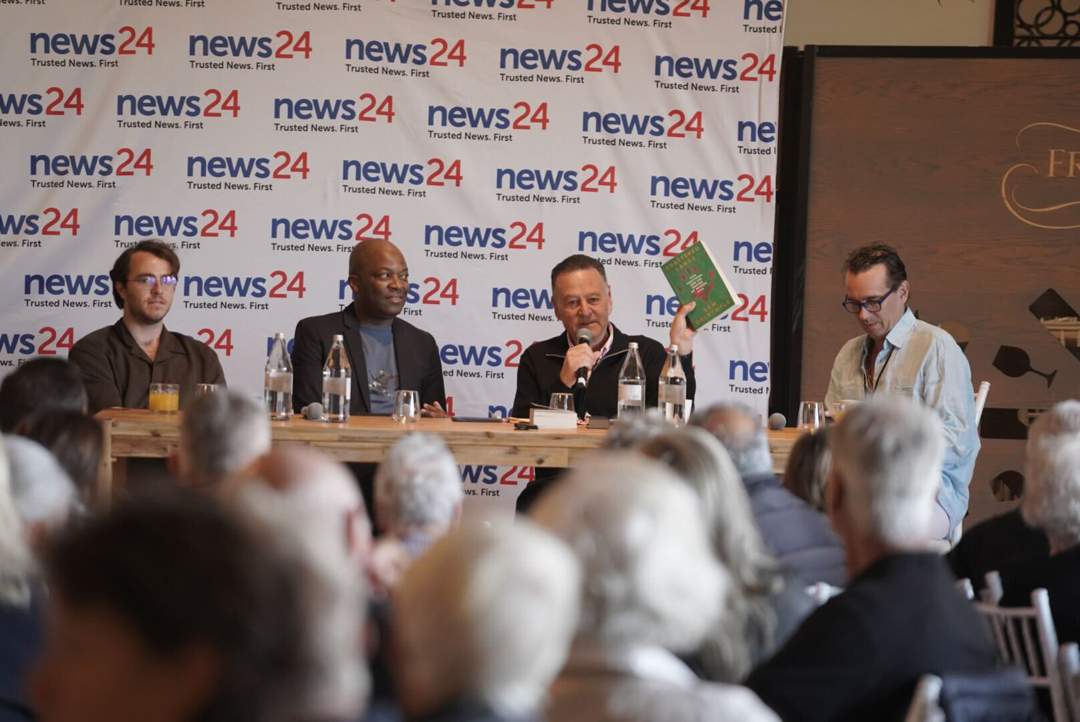
At Sunday’s News 24 breakfast, I had the privilege to interrogate two blockbuster historians, Peter Frankopan and Sam Dalrymple, alongside local commentator Justice Malala.
If Fukuyama is associated with “the end of history” in the West, Frankopan is the modern pioneer of looking at it from another perspective: the sweep right across Central Asia into China and India, the once, and arguably future, stage of global dominance encapsulated in his bestseller The Silk Roads.
Dalrymple’s riveting new book Shattered Lands: Five Partitions and the Making of Modern Asia is a potent reminder of the impermanence of power and empire. As he illustrates in 1928, just under 100 years ago, Mahatma Gandhi travelled from Rangoon in Burma to Aden in Yemen and never left the borders of Britain’s Indian Empire, which encompassed 12 countries under the banner of the British Raj. Which, in its day, was the largest Muslim power in the world. “Kyk hoe lyk ons nou” could be the rejoinder to all this.
The importance of good decisions
Frankopan told us that “the value of history lessons is to teach people the importance of making good decisions”.
I asked him whether it was of concern that the president of the largest power in the world, United States supremo Donald Trump, doesn’t read much at all, least of all history. He suggested Trump was in sync with many Americans who, like him, had a broad view of the world uncluttered by books and learning.
Trump is famous for “going with his gut”, though in the bewildering whipsaw he offers of bombing Iran into the stone age one day and then announcing in the next breath that he is sitting down to discuss a “great peace deal” with the Iranians, his gut keeps changing.
Our Sunday discussion was just after the conclusion of the China-US summit in Beijing. In his communique after its end, Chinese President XI Jinping did offer a lesson from history, all the way back to the Peloponnesian Wars when the two superpowers of the known world were Athens and Sparta, the one rising, the other in decline.
Xi suggested that both the US and China avoid the “Thucydides Trap” – the idea that conflict occurs when the rise of one power and the fear it induces in the other leads to war.
Dalrymple told our breakfast session that “history can always warn us about the future”.
But like the local contest here over the triumphs or failures of BEE and its continuance or rupture, for the world, what those warnings from history are and whether any are heeded is scarily uncertain.