On the 30th anniversary of South Africa’s Constitution, a UCT lecture reflecting on the country’s dwindling Jewish minority offers a telling measure of whether the constitutional promise of minority rights – made in Parliament on 8 May 1996 – is being honoured for all South Africans, writes Tony Leon.
In places and events, both obvious and subtle, we can check the state and health of our Constitution 30 years this week after its enactment.
On 8 May 1996, Parliament debated and then approved the Constitution of the Republic of South Africa Bill, inaugurating the era under which we have lived since and in terms of whose prescripts we are governed.
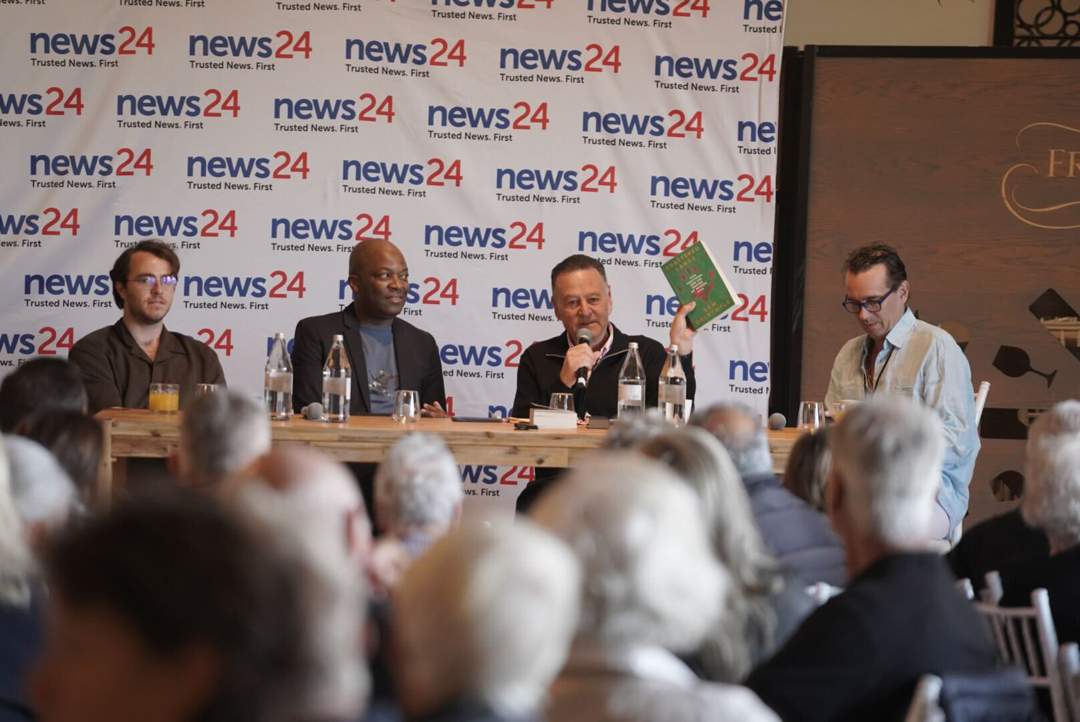
Last week at the University of Cape Town (UCT), I attended the inauguration of a very different sort, though it chimed directly with some of the hopes and fears stirred in the debate on our Constitution three decades ago.
The UCT inaugural lecture was delivered by Professor of History Adam Mendelsohn, and the event was not without risk and controversy. This was evident in the packed auditorium, the presence of a tiny claque of protesters, and a large security detail.
Mendelsohn himself is currently engaged in litigation against UCT and its leadership for failing to properly consult stakeholders and provide adequate information on resolutions adopted by its Council relating to the Israel-Gaza conflict. Not least, an academic boycott barring UCT academics from collaborating with entities allegedly linked to the Israeli military.
Such a background did not prevent UCT leader, Vice Chancellor Professor Mosa Moshabela, presiding at the event, in full academic regalia and praising Mendelsohn’s scholarship and the lecture itself as “thoughtful, engaging and provocative”.
His lecture title, “Where to for the Jews”, certainly provoked interest beyond the venue where it was delivered.
One statistic he offered was that the SA Jewish population has shrunk over 50 years from 120 000 to just 50 000 people today. He illustrated this by advising that if all of them were gathered in one place, they could not fill the Cape Town stadium.
Back in Parliament, 30 years ago, during the debate on our Constitution, I reminded my parliamentary colleagues of the words of one of the drafters of the US Constitution, many articles of which were adapted that day into our own Bill of Rights.
Thomas Jefferson said:
“All, too, will bear in mind this sacred principle, that though the will of the majority is in all cases to prevail, that will to be rightful must be reasonable; that the minority possess their equal rights, which law must protect, and to violate would be oppression.”
Almost from its inception, there has been a tug of war as the country and its politicians have toggled between these opposite impulses, majority rule and minority rights; the very tension the Constitution intended to synthesise.
And in the same period, many leaders of the then-majority party, the ANC, doubted the wisdom of the terms of settlement or established workarounds to gut the Constitution of its protections.
In unvarnished form, this was given direct expression in 2011 by senior ANC minister and NEC member Ngoako Ramatlhodi. He advised that the constitutional transition was “a victory for apartheid forces” who wanted to “retain white domination under a black government”. This was achieved “by emptying the legislature and the executive of real power” and giving it to “the other constitutional institutions and civil society movements”.
An echo found in Zuma’s party
This sentiment, a call for untrammelled parliamentary not constitutional, supremacy, found its echo in 2024 in the manifesto of Jacob Zuma’s MK Party which signalled the junking of the Constitution itself. This simply underscores that, at root, constitutions protect minorities however constituted; the political majority can rely on Parliament to do their bidding. Hence the complaint of Ramatlhodi and Zuma and others, i.e. don’t curb or limit our power.
Mendelsohn’s lecture last week and its delivery in peaceful circumstances and its “provocative” content seem at first blush a splendid affirmation of the very “constitutional and civil society institutions” about which Ramatlhodi complained.
But its contents pointed in another direction. He said the current debate here and in the world on Zionism – rather than Jews per se – functions as substitution rhetoric.
He elaborated:
“The term ‘Zionist’ frequently functions as a collective proxy, especially when paired with classic conspiratorial tropes of global control. This substitution performs two functions. First, it offers a rhetorical justification against antisemitism. Second, it reframes antisemitic narratives as ostensibly political critique… In South Africa, this dynamic is amplified by the moral authority of the anti-colonial narrative.”
If “Zionists” are “colonial occupiers”, it is easy to fuse this framing with “locally resonant grievances concerning land, race and historical injustice”. And with a global conspiracy theory to boot.
He offered as exhibit “A” of this tendency, a 2024 speech of Dr Imtiaz Soooliman, founder of Gift of the Givers.
Sooliman said: “…The Zionists were too clever. They were arrogant, acting with impunity, putting fear into you. They put fear into corporations, into universities, into communities, into governments, into political parties… they run the world with fear.”
Mendelsohn did not point out that “the clever Zionists” have in South Africa, at least, been very unsuccessful in their apparent fear mongering: UCT itself recently conferred an honorary doctorate on Sooliman himself; ANC foreign policy is about as anti-Zionist as is possible to imagine in a non-Muslim country; and few corporations here have any Zionist proclivities, and those alleged to harbour any are subject to regular protest and pickets.
‘Conspiratorial thinking’
However, Mendelsohn did advise his audience that criticism of the government of Israel and its policies and practices, and there is much to criticise, is one thing. But the Sooliman speech is quite another:
“Here we see the hallmarks of conspiratorial thinking, as well as the mechanisms – substitution, euphemism, accusations of collective disloyalty – of a malign strand of anti-Zionist rhetoric. Telling here that the speaker chose to use a very particular set of tropes that have a long antisemitic history – about money, power, subversion, fearmongering, manipulation, conspiracy.”
For Sooliman, it is the “Zionists” who run the world and the country through “fear”. In Mendelsohn’s rather gloomy conclusion to his lecture, it is Jews who are “marginalised, maligned, and made unwelcome”.
Of course, since Jews here are less than 0.2% of our population, their concerns are hardly paramount for most, despite the outsized attention given to Israel and related matters of communal concern.
In any event, as both white and middle class, any unease of the local community can be dismissed.
Robert Shrimsley explained in the Financial Times last week, after the stabbing of two Jews in Golders Green in London: “Some on the left feel bound to dismiss Jewish concerns because of a rigid hierarchy of victimhood.”
Proxy for the health of our Constitution
Yet the political health and constitutional well-being of a 0.2% minority can act as a proxy for the overall condition of our founding settlement made in May 1996, when Parliament passed the new Constitution.
This was the thrust of the response to the UCT inaugural lecture delivered by Professor David Bilchitz, of the University of Johannesburg.
He advised that “the future flourishing of Jews in South Africa is very much tied to the fate of the constitutional promise that was made in 1996. Should the Constitution itself be gutted either de jure or de facto, many more Jews will leave… Should South Africa become a country where constitutional commitments are honoured such that governance improves, crime reduces, diversity of opinions and identities are respected, incitement to hatred challenged, and poverty addressed, Jews will not only remain but flourish. “
Fulfilling those promises, though, is of direct concern to the other 99.8% of South Africans as well, the very pledge made in Parliament on 8 May 1996.