Tony Leon considers the first anniversary of South Africa’s coalition government, reflecting on the ANC’s political decline, the DA’s limited power in the partnership, and the challenges of restoring voter faith amid mounting dissatisfaction.
On 11 June 2024, exactly one year ago, the DA presented its “framework agreement” for a coalition government to govern South Africa in a meeting with ANC negotiators at a hotel basement in Cape Town.
One of the concerns raised at the meeting by the ANC’s Parks Tau was that the DA proposals could “effectively provide the DA with a veto over the ANC… which will spook people”.
The DA countered this by noting that while the document recognised the ANC majority relative to other parties, “sharing power must mean we [DA] have some of it”.
The meeting ended with more amity than enmity.
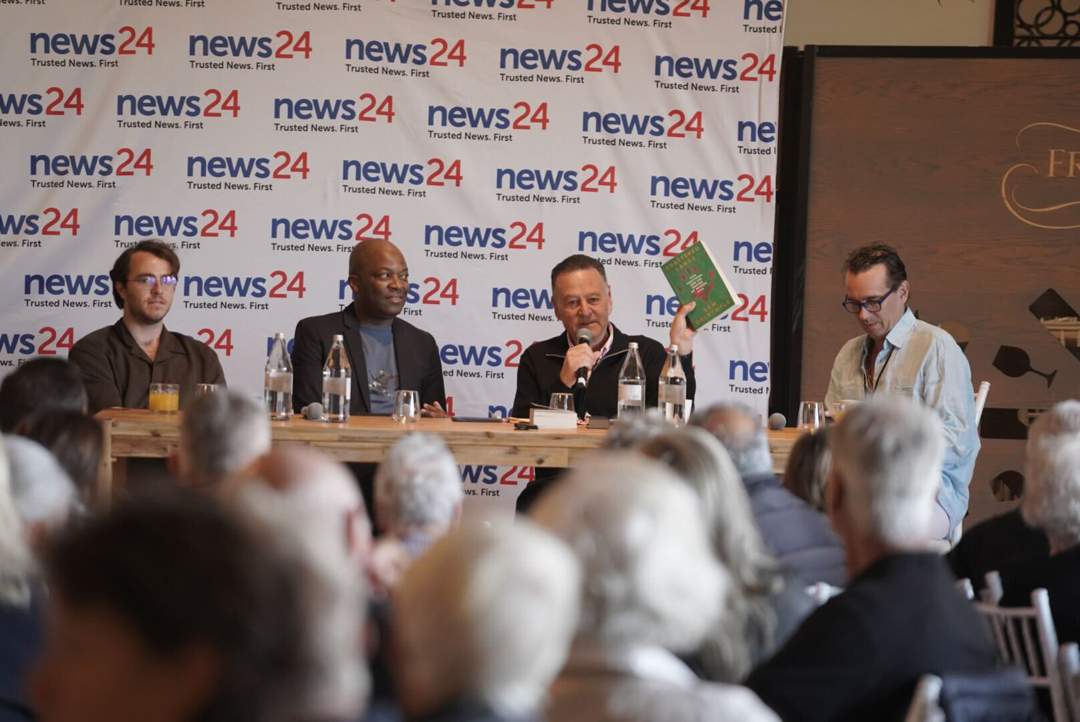
The “takeaway” from the meeting as I observe in my new book Being There was a switch by the ANC from its starting point of a “confidence and supply” agreement to prop up a minority government. Instead, as I described it, “It has shifted onto our preferred terrain of a coalition government, although in ANC speak, this arrangement ‘dare not speak its name’, hence the acronym GNU.”
Three days later, after late night and early morning wrangling over contested clauses, much of that initial document survived into a “statement of intent” signed by both parties. Thus commenced SA’s first electorally necessitated multiparty government.
With the first anniversary in sight of the GNU, commentators can reflect on whether Parks Tau’s fear of a DA veto on the ANC materialised and on how much (or how little) actual power the DA is sharing.
On its face, Tau’s alarm on a veto by the DA appears unrealised: BELA, Expropriation Act, NHI, the draft Mineral Resources Development Bill, employment equity and BEE regulations, the R100-billion ‘Transformation Fund’. Each strenuously opposed by the DA, each though either enacted or promulgated by a government in which the DA is the second largest party.
Never mind a foreign policy that, however “nonaligned” it claims to be, is misaligned with the interests and principles of several non-ANC parties serving in government.
Superficially then the ANC’s “national democratic revolution” one of the great oxymorons of constitutional politics today, continues onward (or more accurately downward, given the state of the state and the economy).
The DA in government continues to note and protest policies and practices it opposes, and resorts to its former opposition stratagem of “lawfare”, or court challenges against the most egregious.
But dig a little deeper and something more revealing is happening just under the surface of the body politic.
Slide continues
The 2024 slide in the ANC support, which necessitated the construction of the ramshackle GNU, continues. A slew of polls and municipal by-elections since the last general election proves anew Ernest Hemingway’s famous remark in The Sun Also Rises: “How do you go bankrupt? Two ways, Gradually, then suddenly.”
It took 30 years for the ANC to lose its parliamentary majority and slide from a healthy 57% of the national vote in 2019 to just 40% five years later.
But the decline in ANC support since suggests that, per Hemingway, the gradual has yielded to the sudden.
An analysis in City Press on 8 June by Dawie Boonzaier surveyed the results of all municipal by-elections contested by the ANC since last year’s national poll.
It found that “the ANC has lost support in 61% of the 127 by-elections it has contested [77 out of 127 by elections]”.
His report concludes that:
“The ANC’s poor performance in by-elections lends credibility to polls by the Institute of Race Relations (IRR) in April and Social Research Foundation (SRF) in February, which pegged the party’s support at 29.7% and 32% respectively.
Section”
Since the SRF proved to be the most accurate pollster forecasting the collapse of ANC support in 2024, even the most myopic party strategist should be able to read the ominous warning signs.
Still, if you were charged with designing the ANC strategy for next year’s national municipal elections, in the words of the Dublin local to a lost tourist seeking directions:
“Well, sir, if I were you, I wouldn’t start from here”
Indeed, ANC-run municipalities are dysfunctional centres of collapsed services, inflation-busting rates and service charges, cratered roads, and corrupt administrations. It’s not an easy sell. But after 32 years at the helm of most municipalities by the time of the 2026 election, the ANC owns its own record.
And that is before the gloomy national picture of minimal growth, mountainous unemployment and rocketing crime is factored into the electoral equation.
DA’s position
Of some interest, though, is the DA’s comparative position in the same by-elections surveyed in City Press. The DA performed better in 47 of the by-elections it contested (64%) and worse in 24 (33%) compared to previous results in the same wards. In other words, its results were directly inverse to the ANC results.
This suggests that while the DA can claim few wins on the policy front in the GNU it, has to date, not been lumbered with the epic failures of ANC governance.
And its ostensible reason for accepting a subpar power-sharing arrangement – without much power in it – was, of course, to prevent an even worse outcome. This hazard, the entrance of EFF or, less likely, the MKP into government remains just outside the door, and Paul Mashatile’s arrival into the ANC presidency will fling it right open.
The first slow and now more sudden slide of the ANC in voter support and how competing parties position themselves accordingly is the clear and present preoccupation of most parties and politicians outside the crumbling majority party edifice.
Disruption of political duopoly
If last year signalled the end of one-party dominance in SA, recent elections in places as far apart as England, Germany, Italy and Spain have seen the disruption of a political duopoly where once alternating rule between two parties has fragmented. It is true that Canada bucked this trend. But the US under Donald Trump – though notionally a Republican, has governed and won elections by repudiating the core philosophy of his three Republican predecessors in most respects (and with little respect at all for the legacy policies of Presidents Ronald Reagan, George HW Bush and George W Bush).
The danger locally, though, for non-ANC parties in the GNU is not that they necessarily get tarred with the brush of ANC failures or policies that are implemented without their buy-in. It is rather that the system itself is seen as incapable of providing any meaningful change in the lives of ordinary citizens.
These folk are not on the sharp end of the plane, the business class passengers where sports minister Gayton Mackenzie prefers the state to fund ministerial travel, nor in hotel stays paid by the taxpayer at the cost of R300 000 per night preferred by Mashatile.
This disconnects with ordinary and everyday life sends its own signals down in the marketplace where voters live or battle to survive. Revolutionary slogans sit ill with monumental ministerial hypocrisy and extreme profligacy.
Opening of possibilities and prospects
For a party such as the DA (and others) the decline of the ANC offers ongoing possibilities and prospects.
But alienation by voters who do not see economic growth materialising in the form of jobs and opportunities and who believe the entire system is rigged against them is the real and future danger.
This paves the road to either opting out of the constitutional process entirely, the path already chosen by millions of unregistered and stay at home voters. Or it brings forward the prospect of an authoritarian alternative. Turkiye and Hungary and the new Polish president and even the incumbent in the White House offer some pertinent examples.
One of the compelling voices urging the formation of an ANC-DA alliance was the late Pravin Gordhan. He advised that, though he was both a communist and incorruptible, it was necessary that “the constitutionalists” get together. Now, one year later, they are sitting around the cabinet table. But will they act to further faith in the constitutional project or preside over its eclipse?