Tony Leon reflects on the ANC’s unwavering commitment to black economic empowerment (BEE) despite the stark contrast between its ideals and outcomes.
Add two ANC faves, indigenisation and transformation, into a Shakespearean soliloquy and the result might be, “To BEE or not to BEE that is the question.”
While Hamlet hemmed and hawed with deep-felt uncertainty and enigmatic complexity, local political leaders display no doubts about the economic choices made over the past three decades.
In both cases, Shakespeare’s Prince of Denmark and the ANC’s signature policy of Black Economic Empowerment (BEE), the results are tragic. Though with a nod to the lighter fare of the Bard, not without a touch of farce as well.
Parliament last week witnessed President Cyril Ramaphosa take the stage with a robust, though quite remarkable defence of BEE.
He advised MPs that BEE will remain in place “until all are equal”, according to one headline report on his answers.
Since SA has the highest GINI coefficient in the world, which measures levels of inequality, this policy will, in his interpretation, long exceed his term of office, or indeed, the lifespans of its keenest advocates.
Though, of course, whether the ANC, never mind its current or even next-generation leadership, will be around to administer it remains in serious doubt.
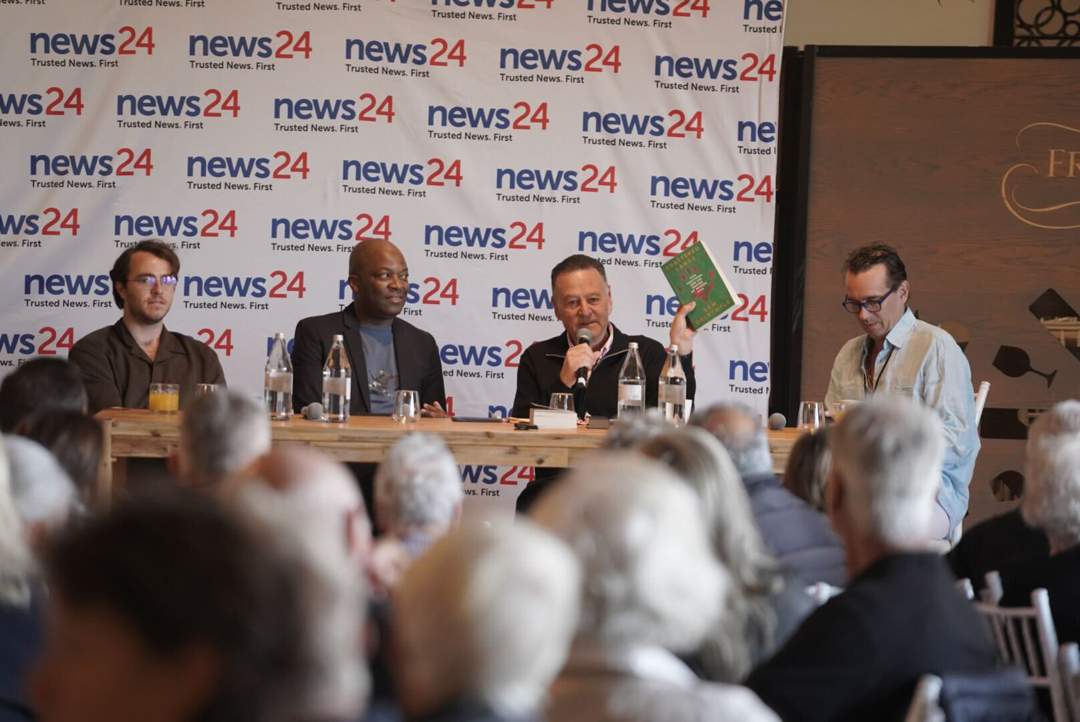
Just before Ramaphosa’s parliamentary answer, I shared a platform at the Franschhoek Literary Festival (FLF) with ANC grandee and former Top 6 member Matthews Phosa.
He advised the audience there that while the ANC had performed poorly in the 2024 election, his old party had “learnt nothing” from its setback at the polls, and in the next election would do well to win just 30% of the vote.
With economic growth at a pathetic 1% or so, far from the 5.4% GDP growth promised by now in the National Development Plan (NDP) chaired by Ramaphosa himself, and with 12 million work-age South Africans unemployed, it would seem sensible to reconsider or recalibrate.
Not a chance.
If billionaire Ramaphosa (estimated net worth R6.4 billion) says that until all are equal (the median South African household income is just R95 000 per annum), then BEE stays, an even more extraordinary defence of policy was offered by a key lieutenant.
‘Scrapping BEE not a good thing’
Minister for Planning, Monitoring and Evaluation, Maropene Ramokgopa, told the Financial Times last week, “Scrapping BEE is not a good thing… it would outrage ANC supporters and lead to a revolution.”
Further, in an editorial, the FT evaluated the essence of this policy as “enriching a coterie of cronies at the expense of economic dynamism”.
Minister Ramakgopa’s claim that a “revolution” awaits us if BEE goes clearly suggests that in her day job, she has been inattentive to her core tasks of “monitoring and evaluation”.
Did she not listen to a recent interview by by governance expert, Professor William Gumede? He told Newzroom Afrika that that BEE has transferred R1 Trillion to around just 100 individuals – of whom Ramaphosa has scooped more than a disproportionate and far from an equal, share. Few of these “political capitalists”, said Gumede, have ever “started a genuine business or managed one and often set up ‘companies’ simply to secure state contracts or resource licenses and BEE shares in the private sector”
So the “revolution” Maropene fears will likely be confined to around 100 families and their hangers-on.
Meanwhile, in the real world, the tempo of public opinion suggests another reality, one in which Cabinet office appears to insulate incumbents from reading.
Polling by the IRR suggest that ANC policy and the recent commitment to doubling down on transformation ideology is far removed from popular sentiment.
A poll in 2024 commissioned by the institute asked survey respondents whether BEE premiums should be eliminated or not. Sixty-four percent of Black respondents and 70% of all respondents “preferred BEE premiums to be reduced to R0”.
If ANC policy is described as “populist”, the necessary conclusion is that this is a stark example of what can be termed “unpopular populism”. Racial engineering does not create jobs, it retrenches them as the depressing labour statistics attest (unemployment on its expanded definition now totals 43.1% in quarter 1 of 2025, one of the worst records recorded anywhere in the world).
This is the exact percentage of the fall in business activity in the manufacturing space in the country released this week by the Absa Purchasing Managers Index (PMI), the seventh straight month in contractionary space, the lowest level of demand for goods since 2020.
The two-line option offered by analyst RW Johnson in 2015 that “South Africa can either choose to have an ANC government or it can have a modern industrial economy. It cannot have both” lives on a decade later sans remorse from those who govern,
A key explanation for the yawning gulf between popular rejection of key government policy and government’s persistence with them was offered by political analyst Mpumelelo Mkhabela in Business Day last month.
He advised, “The ANC’s problem is that it’s got all these transformative policies, but it has corrupted these policies. So people don’t see the value in these policies, however desirable they may sound.”
And, anticipating the view of William Gumede, Mkhabela views any ANC course correction as improbable:
[The] answer is no, it is embedded in its ways, and its leaders derive personal benefit from these policies.
Back to the minister charged with “evaluation and monitoring”. One wonders if Maropene evaluated or monitored the latest iteration of the Mineral Resources Development (MRDA) Bill gazetted for comment last week. Presumably, this should be in her wheelhouse.
As should be the fact and grim figures that since the first version of this legislation was enacted in 2004, amidst singing and cheering from ANC MPs, mining’s share of GDP has fallen from 21% in 1980 to just over 7% in 2025. SA today, according to Michael Avery of Business Watch, obtains only 1% of global exploration, and SA is now right at the bottom 10 of all mineral-rich countries as the least attractive mining destination in the world.
Into this mix steps, as ever flat of foot and steeped in decrepit ideology trailing the whiff of enrichment, Minerals Minister Gwede Mantashe. Before his planned retirement from public life, he will be able to claim, with good cause, that he has wrecked SA’s most historically and economically important industry.
His latest version of the MRDA is, on all accounts, a wrecking ball of investment, doubling down on racial ownership laws and removing the concept of “once empowered, always empowered”. And, according to Mantashe’s notional governing partner, the DA, “it grants new powers to the minister to rule the industry according to his own whim”.
Private mining company’s tailing assets will be expropriated according to one mining company, while other sections of the Bill restrict certain licences to black people only, in this our third decade of triumphant non-racialism.
If Mantashe and his colleagues push ahead with this legislation, the 1% of global exploration budgets we currently receive will appear a fond historic memory. “It will end almost all mining exploration in the country”, predicts James Lorimer the DA spokesperson.
Hamlet’s famous soliloquy “to be or not to be” also speaks of “the thousand natural shocks”. Not a bad description of what the ANC has done to our economy. Though the “outrageous fortune” of which Hamlet also speaks can too be applied to the 100 happy multi-millionaire families BEE has gifted.