Bafana’s dismal World Cup opener against Mexico is more than a football story, writes Tony Leon. He argues that it’s a damning metaphor for a nation where accountability is absent, mediocrity is rewarded, and the gap between 1995’s Springbok glory and today’s decline grows ever wider.
Nick Hornby’s “Fever Pitch” was a 1992 best seller chronicling his life as an Arsenal supporter. He wrote, “Football is entertainment as pain.”
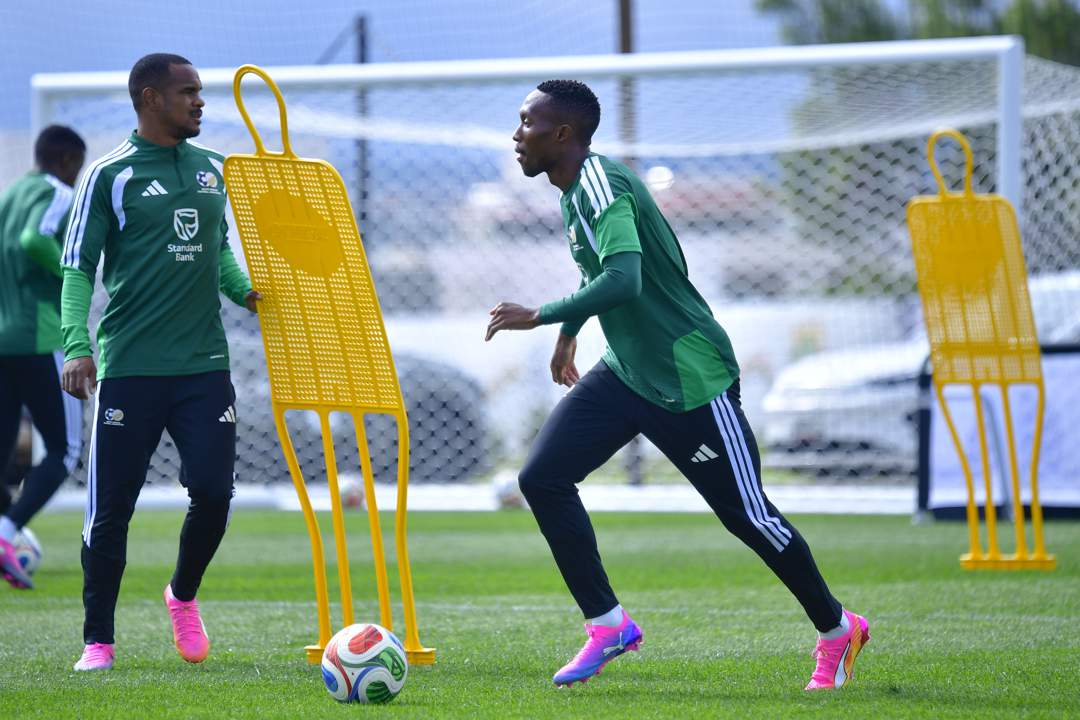
Last Thursday’s excruciating Bafana Fifa World Cup opener against Mexico was more pain than entertainment. The performance on the pitch, though, is unlikely to yield responses off it.
Here, the 1961 words of President John F. Kennedy after the US humiliation at the Bay of Pigs in Cuba resonate: “Victory has a hundred fathers. Defeat is an orphan.”
In the best local tradition, now internationalised, there will be few, if any, consequences for the footballing fiasco. Though, in truth, there are many parties to its accomplishment.
Master cartoonist Zapiro, for example, was quick out of the starting stalls with a nine-panel cartoon strip illustrating the remarkable resilience of team manager, SAFA’s Vincent Tseka.
“In 2022, he failed to book a practice stadium. In 2023, he failed to book a high-performance centre… In 2023, he failed to note a player’s ineligibility due to two yellow cards and caused the team to forfeit a World Cup qualifier…In 2026, his visa bungle delayed the team’s departure”
The strip ends with the question, “Where else but SAFA could anyone stuff up so often and get away with it?” Zapiro then answers his own question with a caricature of ANC secretary-general Fikile Mbalula rushing toward the hapless Tseka with a membership card, announcing, “We’ll have you – sign here.”
Tseka is no orphan in the defeat stakes: What about his boss Danny Jordaan? He has been the SAFA supremo for nearly 30 years (as both CEO and then president). Likely, coach Hugo Broos will get the blame, but he is retiring anyway.
No such luck, alas, on the watch of motor mouth sports minister Gayton Mackenzie, who, while the team didn’t score, managed to score a R19-million jolly to go to Mexico with his entourage. To what end is the question?
He could do one useful thing: interrogate how Cape Verde, with a population 100 times smaller than our own, managed to hold Spain, a top-ranked football nation, to a goalless draw on Monday.
Absolutely no consequence
During the corruption, maladministration and misconduct of the Zuma regime, commentator Justice Malala slapped on the ANC acronym the phrase “Absolutely No Consequences”. But at least when he presided over the country and SA’s hosting of the Football World Cup in 2010, Bafana achieved a creditable 1-1 draw in the same opener against Mexico.
To what extent does football or any global sporting event (and only the Olympics has the same world reach) offer any sort of metaphor for a participating country?
Rugby, of course, has a far smaller global footprint than soccer. In the last Rugby World Cup, the largest ever, 20 national teams participated, the same number since 1999. At this year’s football World Cup, a record 48 teams will play, a huge expansion from the 32 teams that participated four years ago.
For branding purposes, it literally puts a country no one has likely heard of, such as Curacao, on the world map. Its epic 7-1 defeat against Germany on Sunday suggests infamy is the flip side of fame. Though for the smallest country (population 150 000) ever in the World Cup, to score a single goal against the mighty European team might be a consolation of sorts.
Bragging rights
Still, for the vast difference in global reach of football versus rugby, the Springboks give us far more bragging rights than Bafana, even on its best days. They provide never-ending fillips to the national psyche that few ever get from depressed politics or the stuttered economy.
And the real inspiration, later mythologised on film, for a golden footnote of our national story – was the 1995 Rugby World Cup when, in a last gasp, against the run of play, the underdog Bokke beat the favoured All Blacks to grab tournament glory.
While notionally about the final match, the real drama of the story in “Invictus,” the movie made by Clint Eastwood, focused on President Nelson Mandela. And how he used the tournament for nation-building. He got the country, only released from the shackles of apartheid the year before, to unite behind the Springboks, seen at the time as a symbol of white supremacy. And as cheerleader in chief off the field, he willed its victory on the pitch.
What does Bafana’s loss tell us?
In 1995, Mandela and the winning Springboks told a wonderful tale of a country reborn. In 2026, does Bafana’s dismal opener foretell the current trajectory of our national decline? Or on Thursday against Czechia, will we see a refresh suggesting the power of adaptation and reform?
Back to the glory days captured by Invictus. The movie was based on the book Playing the Enemy by journalist John Carlin, whose frontline reporting on South Africa at the time of its uneasy transition from apartheid to democracy was epic in its reach.
It was easy to promote South Africa in football-mad Argentina during our 2010 hosting of the FIFA World Cup at home. And the screening of Invictus in Buenos Aires at that time was a huge add-on in soft power diplomacy. It also helped that Carlin himself was born in Buenos Aires and spoke fluent Spanish.
Yet, while Carlin lyricised our 1995 rugby glory, he was scathing about Argentina’s football performance in the 2010 World Cup.
Bar maybe Pele in Brazil, no sports star anywhere in the world has enjoyed the cult national status of Argentina’s soccer supremo Diego Maradona (1960-2020). He was not just a secular deity, but in more obscure parts of the country, a religious cult was formed around his image.
Highly politicised
Football in Argentina, like South Africa, is highly politicised, and the then governing Peronists were buoyed by support from Maradona and returned the favour by appointing him national coach for Argentina’s disastrous campaign in South Africa for the 2010 World Cup.
Maradona was a magnificent player before drugs and high living destroyed his career. Yet he had no technical competence for the rigours of coaching. He seethed with contempt at any criticism of his team management and selection.
Yet when the defeated team he had led returned home, far from bowed or disgraced, 20 000 Argentinians pitched up at the airport to offer a hero’s reception.
Carlin wrote a scathing assessment in a national newspaper, which read in part:
“Maradona embodies the problem: idolatry to redeeming leaders, the worship of tricks, and its twin brother, the disdain for work ethics; narcissism, faith in magical solutions, the drive to exonerate oneself…The starting point is the denial of reality.
“The failure of Maradona in the World Cup mirrors the failure of Argentina as a country…there is a lack of discipline and planning, and a waste of available resources [this is a nod to his erratic team selection]. Only in the Maradonean system illusion shines [and] the inevitable outcome is failure.”
Of course, the upside of this gloomy football-as-national-metaphor story is that under the more sober-minded and tactically flexible Lionel Scaloni, Argentina won the World Cup in 2022. Many of the same players, better managed and properly led, achieved the top result. He remains the coach for this tournament, too.
And a few months after Argentina’s 2022 triumph, the country threw out the Peronist government and elected outlier Javier Milei president, and economic improvement commenced.
Although hope famously is no strategy, let’s hold thumbs for a step change in play and result for Bafana’s next two matches in the World Cup.
And on their return here, rather than the usual ‘absolutely no consequence’ approach to failure, introspection, accountability from top to bottom, and consequential changes should follow.
And come to think of it, that recipe for future success is not confined to sport. It is a metaphor for the country, too.