Tony Leon examines how newly appointed South African ambassador Roelf Meyer faces the near-impossible task of reconciling South Africa’s racial transformation policies with Donald Trump’s administration’s fierce opposition to diversity, equity and inclusion programmes.
Consequences will follow the appointment of Roelf Meyer by President Cyril Ramaphosa as SA ambassador to the US.
Though one of them will not be that the SA president is forced from office because of this decision.
I was on a brief visit to London this week and witnessed – with some incredulity – how Westminster and the UK media lit up with blazing outrage over British Prime Minister Sir Keir Starmer’s decision to appoint (and then fire) Lord Peter Mandelson as his ambassador to the US.
This week’s chapter in this endless saga, still being written as I write, led one of Starmer’s Labour MPs to declare, “It’s not a case of if, but when” the UK PM leaves office.
Being appointed to the court of King Donald is no risk-free exercise, as Ebrahim Rasool discovered within two months of Trump’s return as US president. The SA ambassador’s incautious words led to his expulsion from his post.
Epstein links
By contrast, Mandelson was removed from office not because he incurred Trump’s displeasure. Starmer fired him when revelations of his close and continued association with dead paedophile Jeffrey Epstein emerged from thousands of pages of emails released by the US Justice Department.
Though what Stamer knew about his own government’s vetting of the controversial Mandelson, and the manner of his disclosure on the process at the time of his appointment, is the cause of the current round of parliamentary and media outrage.
If Ramaphosa took his good time – it was over a year in gestation – in selecting Meyer as the replacement ambassador (and winning kudos for a sound appointment), Starmer, by contrast, hurried along the selection of Mandelson as his pick for the US.
Ramaphosa gets many kickings for his dawdling approach to making difficult choices. By contrast, Starmer’s office was accused this week by the top foreign office civil servant he fired last week for inordinate “pressure to wave through” Mandelson’s appointment.
There’s literally a world of difference between being, respectively, a British and a South African emissary to the US, other than the fact that being an ambassador to America, the largest economic and military power in the world, is the top diplomatic post on offer anywhere.
Seeking favourable trade relations
Yet one metric for success in this challenging office is the ability of the ambassador to secure favourable trade relations with a huge export market, more difficult than ever in the era of Trump’s bludgeoning tariff weapon and now the new choke point on global commerce and supply lines with the closure of the Strait of Hormuz. Its opening, or a long strangulation of the world economy, also depends on the course of the war Trump commenced in Iran.
Starmer’s decision to appoint Mandelson, widely applauded by most commentators and even his political opponents at the time, was to secure a trade deal with the US.
Starmer was prepared to overlook Mandelson’s rackety public profile – he was twice removed from ministerial office due to minor scandals that admittedly would have battled to get to page 18 of a SA newspaper – and a Machiavellian reputation as an inveterate intriguer.
The case to appoint Mandelson was strong, as the Financial Times explains it, “Pick an arch political schmoozer as ambassador to the court of Trump”. And Mandelson was world-class in this league.
Indeed, within months of his appointment, by May 2025, he had used his expertise as a former EU trade commissioner and his working relationship with the White House to secure a big reduction in tariffs from the US to around 10% on key exports, compared to the original 25%, no mean feat in the circumstances.
Yet the downside of appointing him soon swamped this benefit. “There were obvious risks in appointing a figure with questionable ties who had twice resigned from Labour governments under a cloud,” as the FT later sniffed. And the failure to rigorously vet the appointee – now the subject of the latest outrage – compounded the problem.
Rhino-skinned
Starmer himself, charisma-free and without key allies in Cabinet, stands accused not of personal failings so much as bad judgement and continuing missteps, despite his enormous parliamentary majority. More political misery will be heaped on the UK PM when voters in England, Wales, and Scotland vote on 7 May, and Labour will likely lose thousands of seats on local councils and in the devolved parliaments.
One attribute to survive in the snake pit of politics anywhere is to be rhino-skinned in the face of torrential criticism.
Yet a selection of headlines in the UK press this week suggests that even the most weathered and calloused politician might head for the hills or hasten their own departure on reading “Stamer is too stubborn to resign, but too weak to govern”. Or “Britain’s Prime Minister is in power without purpose”.
One of the few counter voices in the media feeding frenzy was Matthew Syed writing in The Times on the weekend. He describes how Britain is in “massive trouble but nobody wants to say it” (flatlining economy, unaffordable benefits, weak defences, etc).
Instead, he writes, “The Mandelson non-story is a classic of the genre, in the scheme of things, a minor appointment of a public official but which has sucked the bandwidth of Westminster, Whitehall and everyone else in public service, and could yet bring down a PM with a massive majority…”
And as he notes, appointing Mandelson might have been a gamble gone wrong but “Trump’s Washington is a snake pit, which is why [Starmer] appointed a snake. Of course, Mandelson failed vetting. That is what happens to snakes.”
Roef Meyer, a man of quiet charm and long experience, is about as non-reptilian a person as imaginable. His appointment as ambassador to Washington has, outside the usual suspects in the race-baiting choir, attracted little opposition and significant and – in my view – well-judged praise. In a country where race and cronyism usually trump merit in public appointments, he is an imaginative choice for a tough assignment.
Untouched as Meyer is by any of the scandals that engulfed Mandelson, he faces a tougher hurdle than the felled UK diplomat had to surmount to carve a trade deal with Trump and the White House.
‘Move on’
This was interestingly highlighted on 13 April by Ramaphosa’s spokesperson, Vincent Magewnya, who advised Elon Musk that he lacked “respect for South Africa’s transformation laws” and, in another post, suggested that Musk move on to other markets.
Yet it is precisely to this huge market that Meyer has been sent, and it is the laws of “transformation” here that bedevil relations over there.
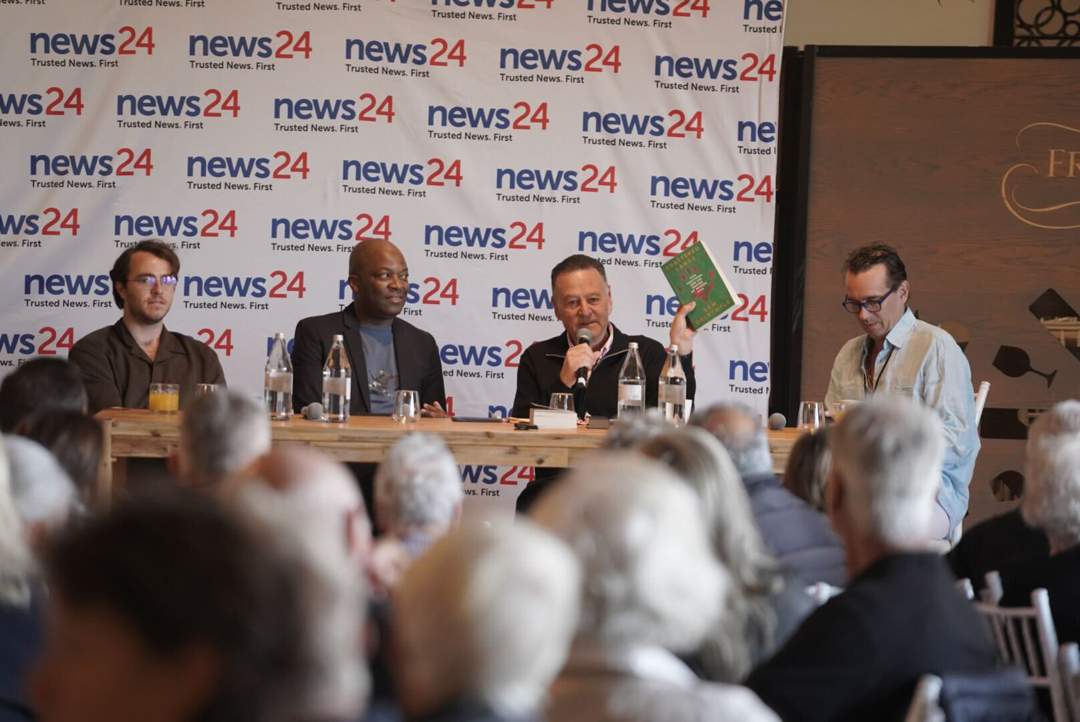
A just-released book by Adrian Wooldridge, a veteran international journalist, is titled Centrists of the World Unite. It pinpoints that whatever else is peripheral or of second-order importance to the famously inattentive Trump, opposition to “DEI” (diversity, equity and inclusion) or BEE in SA is central to the purpose of his presidency.
He writes, “The second Trump administration presented itself as a champion of race-blind meritocracy… The Trump administration issued a flurry of executive orders that not only abolished DEI in the federal government but also went back to Lyndon Johnson’s first introduction of affirmative action in 1965. This includes so-called racial set-asides where public contracts are reserved for historically discriminated against racial groups.
Threading the needle
Just this week at home, the National Treasury announced that the government intends to “reserve contracts and tenders up to R100 million exclusively for bidders who are able to show that 40% of their prior procurement was from enterprises that are 51% black owned”.
Meyer received both praise and blame in his previous political life for threading the needle between the end of apartheid and the birth of democracy in SA.
In his new diplomatic life, he is going to have to find a stronger needle to thread the difference between the two totally different – perhaps incomprehensible – worlds he now straddles. Good luck.