As disillusionment grows and 80% of the population has no direct memory of that 1994 milestone, Tony Leon warns that dumbing down history education will only deepen the disconnect.
A wise caution on how we recall the past, and who does the recording, was offered by historian CV Wedgwood.
She noted: “History is lived forwards, but it is written in retrospect. We know the end before we consider the beginning…”
Another Freedom Day, commemorating the historic 27 April 1994 election, has just come and gone, though only a literal handful (and a half) of members serving in South Africa’s Parliament today were there in 1994. They, together with others of us who have since decamped the National Assembly (or passed on), indeed did “consider the beginning”.
Patricia de Lille, Thoko Didiza, Andries Nel, Corné Mulder, Pieter Groenewald, Kenneth Meshoe and Bantu Holomisa have variegated political pedigrees.
The biggest political figure today, President Cyril Ramaphosa was very much in the 1994 mix as both ANC MP and party secretary-general; though he left Parliament just two years later for nearly a decade.
However, unlike 98% of their current parliamentary colleagues, they alone experienced the atmospherics of that historic first Parliament and know how fraught and fragile the road to the 1994 election proved.
What was remembered this week as a democratic milestone, even a miracle by some, proved at the time a jagged path. It was strewn with obstacles in plain sight, and landmines lurked just below a far-from-calm surface. Bombs exploded on 27 April, and the voting process itself, and the endless counting afterwards, was marked by both chaos and fierce dispute.
The election outcome was accepted with some measure of grumpy resignation by the participants at the time and, only later, with acclamation.
The attainment of democracy not the problematic process that birthed it compels our admiration. Most folk prefer gauzy photos of snaking voting queues to looking too closely at pirate voting stations, unreconciled ballots and the chaos of no voters rolls. Yet both are important to record and reflect.
Pioneers from those heady and dramatic days are few, and the millions of voters who lifted us in 1994 into Parliament are today, if still alive, middle-aged and then some.
When living history fades
It is striking that a first-time 18-year-old voter back then is aged 50 today.
Stats SA advises that only 19.1% of South Africans are in this age bracket, meaning that 80% of South Africans today were not direct participants in the country’s democratic birth. Most have only derivative knowledge of what happened in real time, if they can be bothered at all.
“Meh” was an unknown word back in 1994, though it might describe the apathy, other than the enjoyment of a long weekend or a braai, that many greeted Freedom Day with on Monday.
The late Queen Elizabeth II, an early visitor to that first Parliament in 1995, once suggested that “distance lends enchantment”.
Today, it might be more accurate to suggest that distance only lends more distance; it is disenchantment that prevails.
While Freedom Day commemorates the apotheosis of the long struggle for franchise rights for all South Africans, it is sobering to read how many South Africans regard democratic change itself – not with the warm nostalgia suggested by the late monarch – but with indifference or worse.
This disaffection has multiple roots, from lack of the much-promised “better life for all” (the winning slogan of 1994) to deep disappointment with the bitter fruits of misgovernance. Doubtless, for most South Africans, not being present at the creation in 1994 adds unfamiliarity to today’s mass detachment.
Two newspaper headlines this week summed up the mood of many: “Freedom? What freedom” and “From freedom to looting”.
This is reflected in a recent Humans Science Research Council poll conducted for the Electoral Commission of SA(IEC). It records that demand for democracy has dropped to a historic low, from 65% in the 2000s to 36% in 2026. Further, it found that only 17% of voters are satisfied with the way democracy is working, while 68% are not.
It might mitigate apathy, especially in the formative school years, if young South Africans received a proper multilayered historical account, reflecting a multiplicity of contested viewpoints, on both country history and world events, leading up to 27 April 1994.
‘Wokeish’ indoctrination
This leads to the other half of Wedgwood’s formula: “History is written in retrospect”.
It’s in the frame right now with the contested draft national curriculum statement for history covering grades 4 to 12.
The authors of the project acclaim its decolonisation credentials. History, though, should not be an exercise in ‘agitprop’ (agitation and propaganda). Anyone who suffered through my high school version of the subject, reducing the country’s history to two white headline essentials – the causes of the Great Trek and the arrival of the 1820 Settlers – will get the point.
But which points and, more essentially, viewpoints are advanced in the new draft?
According to educationist Jonathan Jansen, the draft is “anti-intellectual” and “soul-deadening,” failing to provide a robust, critical history.
Analyst Richard Wilkinson notes that global events that led to the advent of democracy and its discontents, from the American, Russian and French Revolutions, have been sidelined, reduced to mere footnotes or adjuncts to the new version, junking a Western perspective. Indeed, the French Revolution “is only mentioned as a side topic to the Haitian Revolution.”
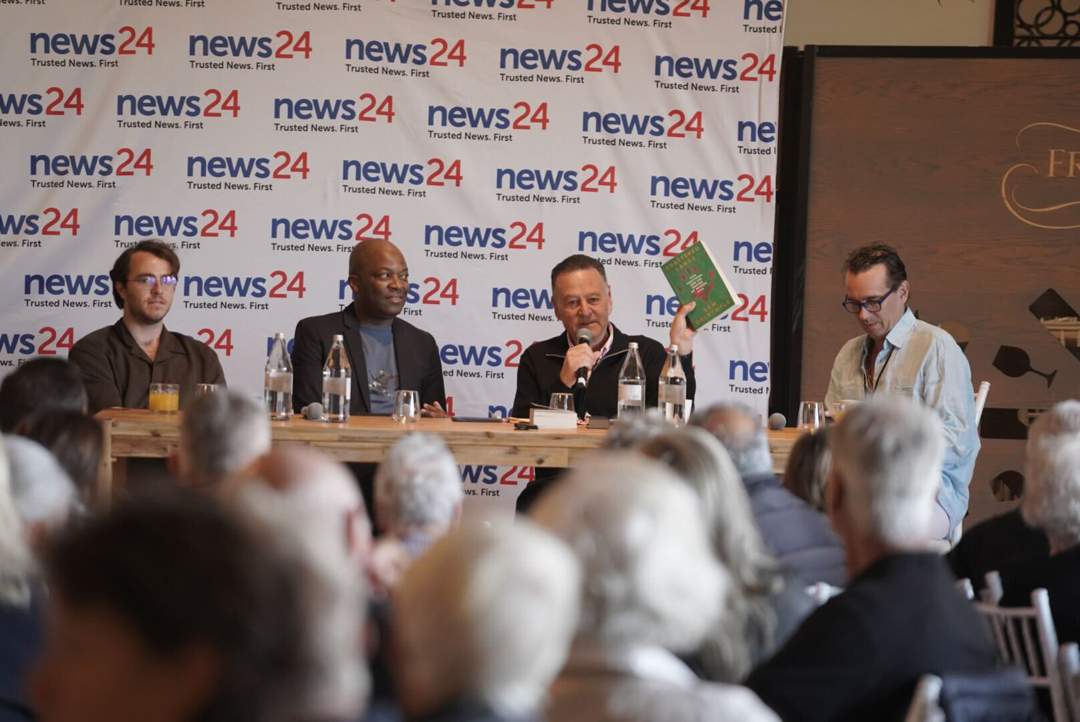
Francis Fukuyama – whose famous End of History thesis arouses still much controversy (and whom I will interview at next month’s Franschhoek Literary Festival) – reminds us that:
“For most of human history [there was] an unequal contest between masters and slaves, until the advent of the French Revolution, which established the principle of equal recognition as the only solution to the human problem.”
“This was the basis for the liberal order that stemmed from that revolution, a principle that subsequently spread through much of the world.”
And that washed up on these southern shores circa 27 April 1994.
Just a pity that the drafters of the new history syllabus intended for our schools, in their zeal to deconstruct world and local history and apply a distorted lens to it, don’t believe learners should have context or even a world view.
The Minister of Basic Education appears to have no truck with this version of “school capture”.
After publication of the draft, Siviwe Gwarube promised: “Our history curriculum should not exclude key events or perspectives on political grounds, nor should it impose any particular ideology on learners.” Amen to that.
As AI threatens to displace human jobs with machines, critical thinking and intellectual rigour could be the lifesaver for many new matriculants. Provide learners with the key facts and a range of interpretations of the essentials, not with indoctrination in “wokeish” ideology.
Interrogating the past to understand the present and make sense of the future is the minimum foundation, especially for those who were not “present at the creation”.