News24’s On the Record summit revealed a country heavy on tactics but lacking the strategic vision and political will to make the hard policy trade-offs—from labour market reform to BEE changes—needed to break free from its self-imposed “Bermuda Triangle” of high unemployment, low growth, and scarce investment, writes Tony Leon.
Jürgen Habermas, the brave liberal German intellectual, died last week aged 96. He had a strong view on the centrality of reasoned debate and vigorous dissent.
He wrote that only an unending, open discourse offered the possibility of a better future. He termed this the “acid bath” of the public square, though one easily manipulated.
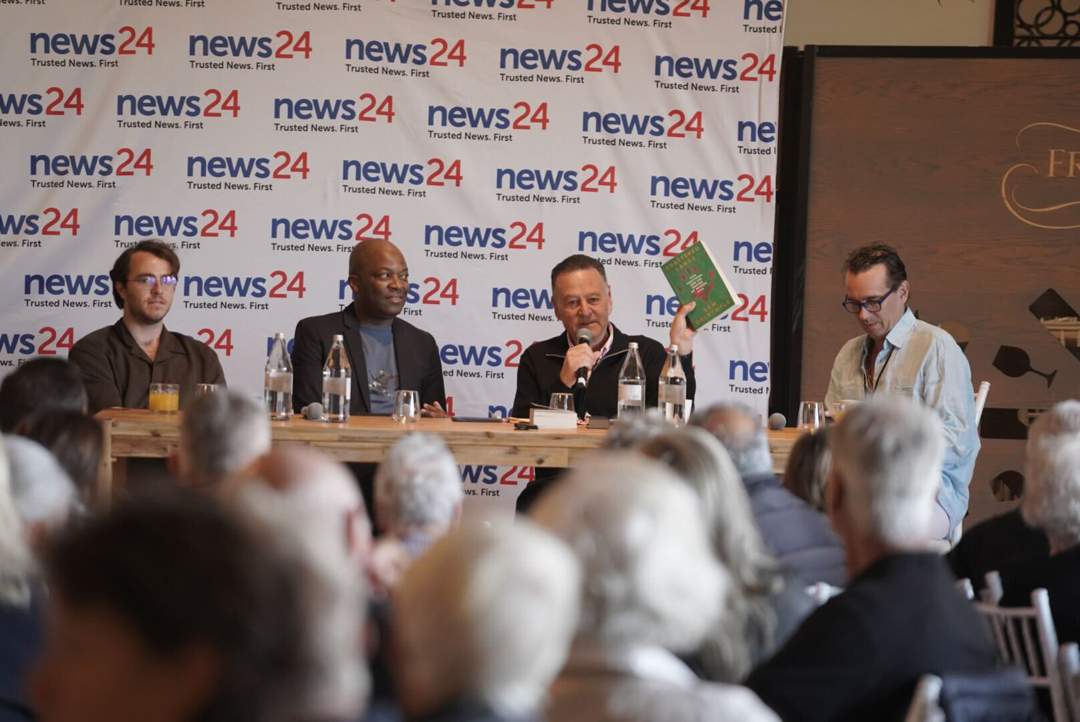
Attending last week’s News24’s On the Record summit titled “5 million jobs in 10 years” was more gentle and less stringent than the late German philosopher’s acidic immersion.
There was no shortage of divergent and practical views in a country where conferencing and talk-shopping is hard-wired into the political psyche, often substituting for actionable, implementable practices (never mind a few consequences for failure, precisely the argument of former minister Trevor Manuel).
A step change from rhetoric to results and firing change-blockers (a suggestion of Cape Town mayor Geordin Hill-Lewis) could get SA out of the cul-de-sac we have navigated. This was dubbed by Adrian Saville, an economist, as “choosing unemployment”.
Of course, summits and conferences aren’t shortcuts to results, but properly interrogated outcomes could provide a route map to change. In the hands of the government, less so. Anyone remember the National Development Plan birthed by a National Planning Commission way back in 2012? Except as a logo on government letterheads, it has withered on the vine of inattention and neglect. Perhaps in the hands of civic society, engagement can get some results.
On the money
The most entertaining and deadly on-message presentation was the keynote speech of Irish economist and author David McWilliams. Master storytelling and impish humour might be national characteristics, but on journeys needing maps, McWilliams was on the money by reminding his spellbound audience that growth, the sine qua non for job creation, needs a strategy.
He vividly retold the “Rumble in the Jungle” epic boxing bout between Muhammed Ali and George Foreman. Ali famously used his opponent’s superior strength, via his “rope a dope” tactics, to wear him down and win the match. Resting on flexible ropes and absorbing the blows were the tactics; exhausting hard-hitting Foreman to “punch himself out” was Ali’s strategy.
As McWilliam’s advised, SA needs a growth strategy (just as Ireland had decades back) to conquer unemployment. And the key to unlock this door is to attract investors and money. By implication, SA doesn’t have anything of this sort. Tactics without strategy, like trying to hang curtains without a rail, are futile.
A tactical president
Opening the conference, President Cyril Ramaphosa was highly tactical. He was delighted to graft its proceedings onto his own “National Dialogue” (ND), whose progress reminds one of the Loch Ness Monster or the unicorn – much spoken of, seldom sighted.
Projects need good project management, as one ND grandee lamented privately in its absence.
Indeed, Ramaphosa acknowledged that it is the private, not state, sector and the rigour of competition that drives down prices and delivers the best outcomes. He couldn’t quite bring himself to say that his much-touted Operation Vulindlela (OV) has notched up successes when the business sector was onboarded to reverse the catastrophic collapse of state institutions, from harbours to electricity to railways and visas.
Some in the audience commented that Ramaphosa’s speech rich on tactics and history – apartheid and exclusion, emphasising OV wins and the merits of inclusion, the power of market competition and dialogue, were warmed-up old favourites.
Entirely absent from his – or most other remarks – last week was the ongoing war in Iran and the Middle East, an event that has already deepened local economic pain very significantly.
Talk about a lack of aims (or multiple and contradictory ones) ineluctably leads to the president of the US. American military prowess is a mighty tactic, but in Iran, it’s untethered to any coherent or consistent strategy. If Ramaphosa is burdened by too much history, Trump has no interest in any of its lessons.
Again, boxing gifted us with a relevant philosophy. Mike Tyson famously said, “Everyone has a plan “till they get punched in the mouth”. Or the Strait of Hormuz gets closed.
Ramaphosa did make some concessions on current “mistakes” of government policy, namely “terrible local governments” and failing SETAs, but this was more laundry listing than any bold new strategic initiative. Absent hard trade-offs (such as reform of the labour market, massive deregulation, corporate tax cuts of the type witnessed in Poland and – recently – in Argentina) expect more looks in the rear-view mirror, absent a view in the windscreen of future reforms – the sort of bold policy moves needed to attract investment and attack the horror of 12 million people without work. As one speaker graphically illustrated, in human terms, this would mean an unbroken line of people stretching from Cape Town to Lagos.
Under review
Since BEE and its impact on unemployment were front and centre of the summit, just a kilometre or two away from the venue, in Parliament, Ramaphosa’s deputy, Paul Mashatile, advised that while BEE might be under “review”, it was “nonnegotiable”. We will be invited to tinker on its edges and ramp up “compliance”, but these are the limits of government “reform”, according to Number Two. In other words, you are invited to a debate, but its essence and outcome are predetermined.
This crippled state of government politics and its lack of policy imagination were well summarised, again, by Manuel, now long liberated from the cares of collective responsibility and party discipline. And while Ramaphosa is famously chameleonic, the one feature he does not disguise is his fealty to the party above all else.
Hence, Manuel’s arch comment that before the president (or his deputy) can act, he has to report to Luthuli House (ANC HQ) on key governance issues. Such subservience to the party is another dead end. So, expecting the same party machine to produce a messiah to fix things is delusional.
That said, across the South Atlantic, Argentina’s libertarian president Javier Milei has a touch of the messianic in his quest to reverse decades of populist low-growth economics. In a country where Peronism was for decades an altar for worship of the failing state, Milei, a true apostate, has radically reversed things. And he doesn’t need a permission slip from his party to act.
It’s probably a case of confirmation bias: I lived and worked in Argentina under the “ideological necrophilia” or the dead hand of Milei’s statist predecessors. So, at the summit, I found the presentation of Milei’s deregulation czar, Federico Sturzenegger, an old acquaintance, the most urgent and relevant for our low-growth, high-unemployment and scarce-investment landscape.
He told the audience that pre-Milei, Argentina was trapped in a self-made “Bermuda Triangle” of powerful unions, crony capitalism and political interests. The precise place where investment shrivels, and jobs disappear. Sounds very familiar.
To reverse this is tough and the road is hard, he advised, but there is an upland in sight. The big difference between here and there is that Argentina’s president has a “theory of the case” – an entire and unbending view of how sound economics needs to usurp broken politics.
SA’s ruling elite is unlikely to adapt lessons from Argentina. It likes Latin America, but far prefers the comrades in collapsing Cuba to the liberal economics on offer from recovering Argentina.
One of this country’s most successful investors and wealth and job creators, Johann Rupert, once advised:
“Investors do not invest in places where people call each other comrade.”
His voice was missing in the debates of last week, but it’s worth bookmarking his comment.