Not since August 1971, when US President Richard Nixon permanently ended the “gold standard” – the last formal link between the precious nugget and major currencies – has the yellow metal enjoyed such prominence.
Today it’s in the news again as the spot price of gold recently hit a record high: $ 4 300 per troy ounce.
Back when Nixon created the modern era of”‘fiat currencies”, untying the value of the dollar to a commodity, SA by a wide margin was the largest gold-producing country in the world. Our annual 1 000 tonnes accounted then for more than 70% of global production.
The gold price back then was fixed before the “Nixon shock” at $35/oz; it rose, after his uncoupling, to $120 a year or two later. Little wonder that SA, amid apartheid rule, posted such impressive numbers, cresting at 6.3% GDP growth in 1973, a figure unmatched since. Even the dead hand of National Party economic ideology – of which more just below – could not stifle world demand for our ore.
The clear linkage between that era and today’s is the haven status of gold as a store of value in times of deep uncertainty and global volatility.
The causes remain remarkably enduring as does the allure of gold. These range from fear (or reality) of rising inflation, loose monetary policy, and regional and even potential world conflict.
Donald Trump’s weaponisation of trade tariffs has added another ingredient to this heady cocktail. Many analysts suggest that a retaliatory cycle of the 1930’s “beggar-thy-neighbour” will become the new normal
However, today – unlike in the 1970s – the surge of attention and attraction for gold is having little effect on the fortunes of our local economy.
In the intervening years, SA has tumbled from its great height 50 years back to new lows in terms of gold exploration and production: Today we produce around one 10th of our once mighty production volumes, and we barely make 12th place of international producers, providing a modest 5% of global output. It has been more than 15 years since an underground gold shaft was sunk in these parts.
At its height, when Cyril Ramaphosa bestrode the mighty National Union of Mineworkers in the 1980s, an estimated 500 000 to 550 000 people were employed in gold mining alone, accounting for two-thirds of all mining jobs according to SA Reserve Bank statistics. Today, excluding the dark story of Zama Zama illegal mines, just over 94 000 workers are so engaged, according to Engineering News.
Of course, some of the causes for our dizzying descent and why the spike in the gold price won’t rescue our economy or staunch our jobs bloodbath relate to geology, not politics.
Extreme mining depths, exhaustion of shallow deposits, and the dangers and costs of very deep-level mining have contributed to the decline. But we still have vast, unmined gold reserves underground.
Geology alone, though, doesn’t account for the decision of most storied local miners from Anglo Gold Ashanti to Gold Fields to up sticks here and locate their operations outside South Africa, from Ghana (ranked 10th in the world to Peru (ninth largest producer).
When, in 2023, the plain-speaking former boss of Sibanye Stillwater, Neal Froneman, declared that SA was “uninvestible” as a mining destination, he was not referencing our challenging rockface. Rather as he expressed it:
“Investors are very negatively disposed toward South Africa…they’ve lost faith, and they’ve lost trust in the government.”
Just last week, an update on this gloomy though sadly accurate account was provided by mining maven Peter Major. He told Biznews that we have fallen from the best mining destination in the world “to among the worst”.
He specifically cited the state control of mining, its constantly changing charters, and onerous BEEE ownership requirements (never mind the corruption and vast inefficiencies in the department of minerals) .
Major advised:
“[The government] was also changing the legislation nonstop. You firstly had to have a BEE partner that owned 25%, and that quickly increased to 30%. And then they said 70% of the money you spend had to go to BEE suppliers. As if nationalisation [or ‘state custodianship’] was not enough, they put all these horrendous conditions that drove capital away.”
And it takes a vast amount of capital, often foreign, to sink a single shaft.
You might have noticed, even if many did not understandably pay it any attention, that not one of the ANC’s 10-point “economic action plan” addressed any of this. True, if (and whenever?) any of the items are implemented, the extreme price of electricity and the bottlenecks at ports might be eased. But no change to the central pillars of state control, intervention and dysfunctional regulating.
Compare and contrast the setting sun on mining, especially gold, here with the sunnier renaissance that now embraces an even older SA industry, winemaking.
Perhaps the good fortune for viticulture in the Cape, is that none of the ANC barons, from Ramaphosa to the maladroit minister of minerals, Gwede Mantashe, had a working background in the vineyards. Their trade union careers were in the mining sector, and they used their governmental powers to decimate an industry that could have salvaged the economy.
Local winemaking, amidst a global oversupply, has seen SA emerge to eighth place among world producers and witnessed, due to currency weakness and attractive terroir amid climate change in Europe, around 30% of SA vineyards now under foreign ownership. Excellent and highly creative owner-managers locally are an additional plus point, accounting for foreign interest and sales.
The ANC-led government’s constant meddling in mining has been unmatched by much attention to winemaking and has not burdened the local industry with the equivalent regulations and restrictions.
However, the relative success, amid many challenges of winemaking here since the democratic era, is also a powerful counterpoint to the narrative that the previous NP regime was business-friendly, market-sensitive, and if malign in its racial policies, was at least benign in its approach to industry.
There is today on social media a crop of bloviators who reprise warnings from John Vorster and PW Botha on the endless disasters in store for the country on the advent of ANC rule. That the ANC has proven some of those predictions true is the most shameful aspect of our current politics.
But it hardly validates the apartheid-era nostalgic contention that the previous era was a triumph of free markets and unfettered industry.
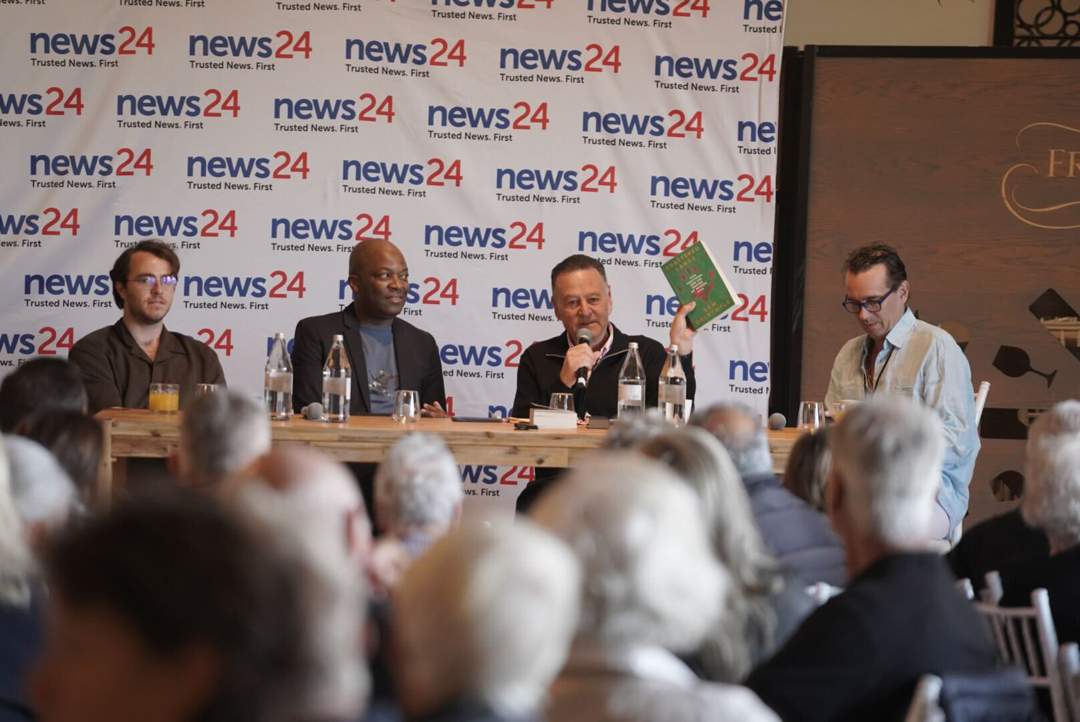
A useful correction on this is provided in a new book entitled “Red Tape” by Bridgid Hamilton Russell. She is the daughter of Tim Hamilton Russell, the pioneer of winemaking in the Hemel-en-Aarde Valley near Hermanus, home of the eponymous vineyards whose “burgundy style” wines are the toast at some of the finest tables in the world.
But – as the book recounts – simply to start a wine estate, the right to refer to the cultivars by their correct name and the (failing) battle to avoid arrest and criminal charges for flouting the apartheid era of “control and regulation” was a battle and a half.
Even as political change haltingly commenced here in the 1980s, local producers could not even mention a French region in conjunction with words such as “style” or “type”. Saying that a Hamilton Russell was made in Burgundy style or Bordeaux style was illegal.
And even while the 1989 legislation improved on the previous regime, where the Broederbond controlled KWV ( an ultra-protectionist state-mandated body) flattened all competitors or start-ups, until 1992 it had a total stranglehold on the local industry.
Bridgid writes: “The [state-mandated KWV] quota system introduced in 1957, allowed the organisation to dictate not only which grapes could be grown but also where they could be grown. And because KWV also controlled the importation and distribution of new grape varieties, Tim could not say that his wines were made from Pinot Noir or Chardonnay since he had obtained the plant material “illegally’” {Back then adventurous local wine makers smuggled foreign vines in their travel bags into the country].
Levels of incomprehension
Reading this today induces Alice in Wonderland levels of incomprehension. Though it might encourage some ANC control and command types to wonder why they haven’t set their sights (yet) on the wine industry for an exercise of call back the past.
Happily, today agriculture under John Steenhuisen is outside ANC control. But in fact, the first ANC minister of agriculture in 1996, Derek Hanekom, notionally a card-carrying communist, freed the dead hand of the state from agriculture and viticulture.
It was a process started by his immediate predecessor, the NP’s Kraai van Niekerk. Perhaps both had read the account, reprised in this book by the late wine fundi Dave Hughes on his experience at a conference in the 1980s.
“I was once asked to explain our wine industry to an audience of people from all over the world. When I had finished, and it took a while, there were fewer than a handful of people who said they fully understood what I meant; they were the delegates from behind the Iron Curtain.”
By contrast, the tragedy for mining in SA today is that the minister in charge, Gwede Mantashe, is a true believer in that system that failed.
For his results, just look at mining investment and the gold price surge that in his hands has turned to dust. Not gold dust, just dust.