A rare public speech by influential businessman Adrian Enthoven, in which he claims that South Africa has “turned the corner” after a decade of decline, has ignited fierce debate between optimists and sceptics warning that deeper political dysfunction still threatens any economic recovery, writes Tony Leon.
The opposite of one compelling truth is not, as has been suggested, a falsehood but simply another compelling truth.
This binary suggested itself as debate joins on the future trajectory of SA Inc – is the destination sunny uplands or the low road of dark dystopia?
Your view on the future, or even current, state of play depends in part on whether you are an optimist or a declinist. Or to use the old cliché, do you see the bottle half full or half empty?
The lens through which we view events informs the decisions we make.
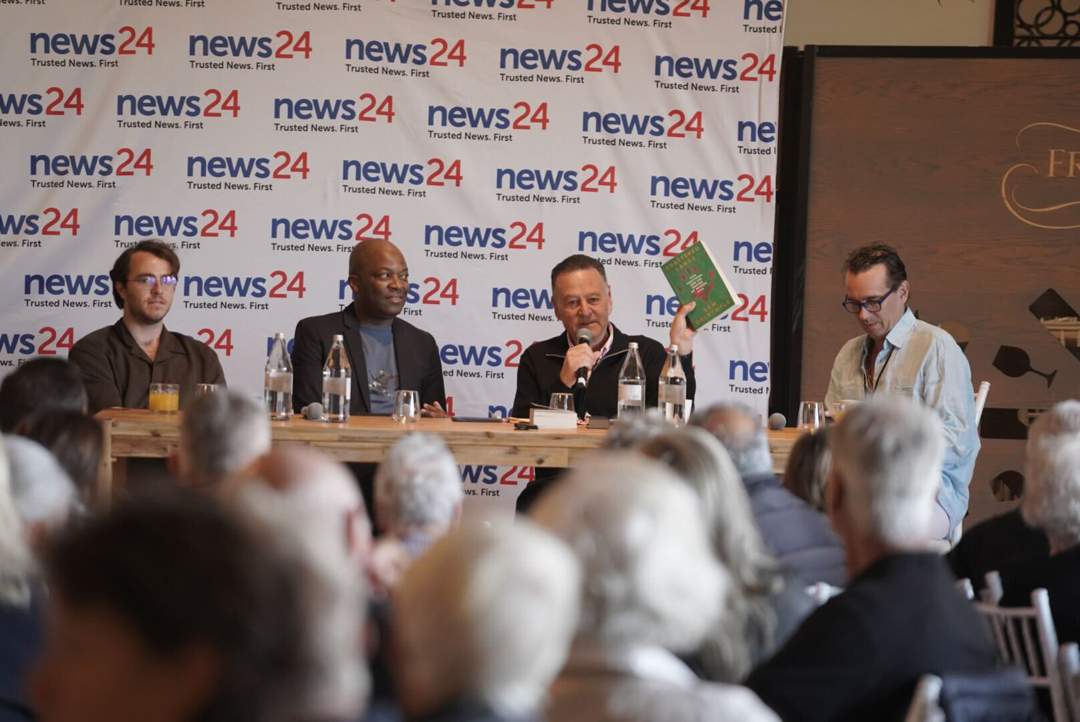
The latest round of national navel-gazing was sparked by a rare public speech by Adrian Enthoven, a leading business and investment figure in South Africa.
The rarity of his public commentary and his influential but self-effacing behind-the-scenes role in leading business cooperation in fixing the state stands in contrast to certain other wealthy business bloviators and pundits. This ensured outsized attention for his recent remarks in Stellenbosch, where he posed and answered the question, “After 10 years of decline, has South Africa turned the corner?
Enthoven describes himself as “by nature an optimist” and cites his business-government collaborator, Discovery founder Adrian Gore, warning against “declinism bias”, which Gore explained back in 2019 was a case of “attitude drives fundamentals, not the other way round”.
Back then, American author and business guru Seth Godin warned in a wider context of the dangers of “catastrophisation”. He suggested that a sure way to grab attention is to cite every problem or even tragedy as a catastrophe, and we catastrophise issues or matters in order to shift our attention and activate our emotions…“it’s a bright red button that causes our emotions to seize up”.
In other words, if you believe that the country, or the planet for that matter, is en route to hell in the proverbial handbasket, there is nothing to be done, and you might as well disengage or emigrate (if you can).
Upside
Certainly, the canvas on which Enthoven sketched his lecture is a lot brighter than when Gore issued his rejoinder against a negative bias and the cognitive inclination to see the threats that harm us drown out the “tremendous potential and opportunities” of the country’s economic upside.
In fact, a few days after Enthoven’s “joyful aria”, as commentator William Saudesrson-Meyer called it, further dollops of good news arrived in the form of the medium-term financial statement that appeared to stabilise our looming debt crisis and anchored inflation targeting at the lower range of 3% with the promise of lower interest rates and borrowing costs to come. This, in turn, saw a rally in local equity buys by foreign investors and the first credit rating upgrade in two decades by one major agency even if it was heavily caveated.
Enthoven to be sure narrowcast his case for optimism on the future of SA Inc by focusing, with detailed precision, on the enormous efforts of Operation Vulindlela, co-piloted by the state and business leaders (in which he is integrally involved) the energy, logistic and water crises buffeting the country. Largely caused by the decade of state capture, he suggests that this impressive turnaround will lead over time to the “flywheel” starting to spin. Then, he suggests “confidence, growth, state finances, service delivery, job creation, and national prosperity will become a self-sustaining positive feedback loop”.
Enthoven, as Sauderson-Meyer and other sceptics note, focused his remarks on “technocratic repair work”. He rather tiptoes around the politics that bedevil and retard the economy and offer us such paltry growth rates, devastating unemployment numbers and increased poverty and inequality.
Political minefields
To be sure, he mentions that “politics trumps everything” and cites the continuance of the GNU and the support within it for the structural reforms he detailed as proof of the “positive trajectory that we are on” and a political centre that is holding.
But what he does not address are the large political minefields scattered under our national landscape and here we are spoilt for choice: cadre deployment, BEE (and the corrupt network spawned under its umbrella), deindustrialisation, expropriation without compensation, the ANC’s dislike of the private sector (and ceaseless meddling in each economic nook and cranny), vast regulatory overreach et al. Never mind a foreign policy etched in the most hostile anti-Western colours.
Here, dissenters on the optimistic future scenario enter the debate.
For example, RW Johnson, the academic and author, recently penned an article written in far more stygian hues.
He states: “Thanks to apartheid, South Africa was already a very unequal country in 1994, but it has become a lot more unequal under ANC rule. One reason for this is that mass unemployment is probably the most effective way there is of redistributing resources from the have-nots to the haves, and under the ANC, South Africa’s unemployment has quadrupled. However, as if that were not enough, the ANC has adopted all manner of measures which seem to be positively aimed at exacerbating the situation.“
Here Johnson offers a raft of facts and statistics to buttress his contention: For example, paying “already greatly overpaid” public servants yearly above inflation wage settlements has not only increased inequality, but has landed the country in the “crazy situation” where 17% of GDP is spent on paying the public service compared to 7% among comparator countries.
Johnson notes:
If only that 10% of GDP was put into capital investment, we would have a healthy economic growth rate and far lower unemployment. Currently, South Africa’s Gini coefficient [ a measure of inequality] stands at 0.67%, well ahead of all comers.
Section
One could add that no amount of sonorous G20 declarations and statements next week will alter that trajectory. Only political will can.
It might be tempting to park Johnson and other dissenters from the sunny uplands’ scenario (such as Moeletsi Mbeki and Magnus Heystek) in the corner reserved for “declinists”.
Though as the French philosopher and journalist Jean-Francois Revel wrote decades back in his book How Democracies Perish: “My function here is not to be optimistic or pessimistic. I am stating the case. It is the case that is pessimistic, not the person stating it.”
On the contentious debate now joined on another hot-button topic largely unmentioned by optimists and emphasised by sceptics, namely BEE, a new influential business voice also recently emerged. And he did so in a strikingly nuanced way.
Fani Titi, CEO of Investec Group, offered on these pages an answer to what he termed ‘the most delicate question that we can no longer postpone”.
That is “transformation”, which he acknowledges has lifted a significant number of people up the economic ladder, including himself, “ought ultimately to be directed at poverty and capability rather than focusing solely on race and gender”.
This is quite similar to the approach recently offered by the DA that the ANC almost immediately rubbished as “anti-transformation” in typical blustering and thought-blocking fashion.
Titi, far more difficult for the ANC to dismiss without careful interrogation of his view, offers a welter of useful suggestions in place of the usual zero-sum game of BEE policy and practices, to which, in the face of all evidence to the contrary, the ANC doubles down on at every turn.
Rather, as Titi proposes, any public contract that offers “preference beyond value for money should be transparent and minimal”; an end to cronyism in public appointments, the use of employee participation schemes and widening of equity equivalence models in place of blunt racial BEE divestitures.
He elaborates, with precision, on each of his proposals.
Will the government listen or act is the immediate question?
There is, at the conclusion of the Enthoven lecture an interesting aside where he mentions his Free State family and their appreciation for the words of President Jan Brand, the old Boer leader, who famously remarked: “Alles sal regkom as elkeen sy plig doen.” (Everything will come right if everyone does their duty.)
As I discussed many times in previous years with leading members of the same Free State family, the problem with our governance is that everyone cites the first part of the saying without the qualifying second part.
Let’s hope that Enthoven is right and the government finally might do its “plig”.