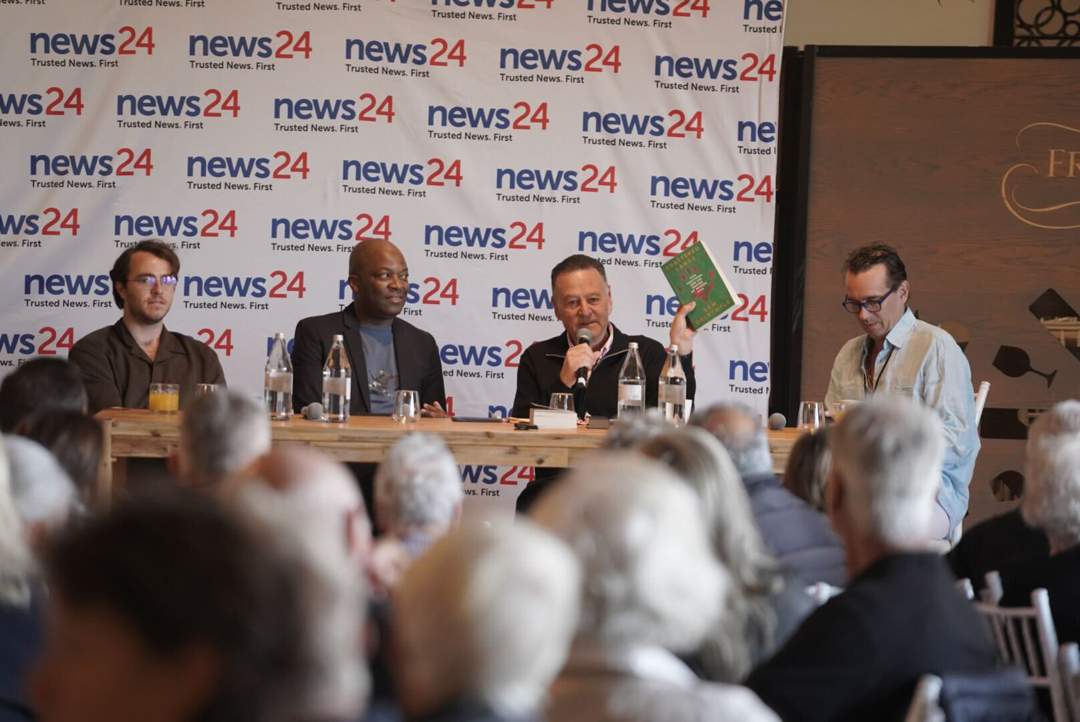
Former DA leader Tony Leon argues the party faces an existential identity crisis as it navigates between its historic role as effective opposition and its current position as part of the GNU, with its upcoming congress serving as a crucial moment to determine whether the party has been “muzzled” by the ANC or can leverage its position to build a viable political alternative.
It is self-immolating – having joined a forerunner of the Democratic Alliance (DA) as a young boy over 50 years ago and having led the party for 13 years – to plague it with unsolicited advice.
Personal affiliations are one thing, but democratic citizenship is another. Here, the editors of News24 requested my opinion on how best, and whether, the DA can span the dichotomy between its identity as an opposition force on the one hand and preserving its position in the current government of national unity (GNU) on the other.
The DA, in its 25-year history, got some things right and others wrong. But one clear accomplishment was its core positioning as an effective – and indeed the official – opposition.
The arrival of Cyril Ramaphosa and the “new dawn” hope and hype led to a DA undertow, and it hit an electoral shoal and a reversal in the 2019 election.
However, after five years of an unsighted new dawn and Jacob Zuma’s revenge mission against his own party, the 2024 election result plunged the once unchallenged ANC and the country into uncertain waters, treacherous for both its political navigators and for its economic future.
The DA only advanced modestly in the 2024 election compared to 2019. Yet, its 21.81% vote placed it centre stage for the first time in determining who would form the next government and, also for the first time, whether the DA would enter it.
The DA platformed its election campaign on a “moonshot pact” – building a government of opposition forces to oust the ANC and prevent “a doomsday coalition” of rejoined ANC factions (ANC-EFF-MKP).
“Moonshot” misfired, but “doomsday” remained in sight in a post-election scramble to build a coalition, when a 40% ANC went in search of governing partners.
The DA decided to prevent the “doomsday coalition” from being realised. And so, to borrow modern slang from UK politics, it performed a “reverse ferret”.
Charge downplayed
This means a U-turn followed by an explanation that denies a change has occurred. So, when critics pointed out that going into business with the ANC meant abandoning its election promise and historic identity, the party downplayed the charge and highlighted its other pledge – to prevent the EFF/MKP from entering government.
Of course, both propositions were correct. And the tidal wave of voter opinion (largely maintained since the GNU was formed) and the voice of business (including party donors) suggested the DA decision was right for both country and party.
That was the background and state of play circa June 2024, when the DA entered national government and forfeited its leadership of the official opposition in Parliament, a position it had held (first as the DP) since 1999.
Now, on the eve of a pivotal party congress, new questions are being asked about its role in government. These include whether its current trajectory helps or hinders prospects for national and party advancement and – crucially – how and whether it can bridge the divide between being a junior partner in an ANC-led government and building an alternative political future that consigns the ANC to diminished status.
In my experience, questions around leadership are not just about personalities, but more significantly about purpose.
These would include:
- Who are we as a party?
- What does the party stand for?
- And, whether voters and supporters can tell the difference between DA and ANC.
I deprecate the personal attack that axed former DA minister and member Dion George levelled at John Steenhuisen, DA leader.
I know from experience that the exiting remarks of a defecting or departing party member should be treated with caution.
I also have no knowledge of whether George, while a Cabinet minister, used his executive (including co-chairing of Cabinet cluster on “international cooperation”) post to retard ANC policies on foreign policy misalignment and racial BEE that he now accuses the DA of being complicit with.
However, disentangling the personal from the political, George levels one charge that the party should interrogate.
He says [stripping out his ad-hominem attacks]:
I cannot remain in a party that has … been captured by the ANC and other criminal interests. The result of this capture is that the DA has been completely muzzled and lost its ability to lead in South Africa’s interest.
Section
Other people, both inside and outside the party, ask the question from objective interest and without personal motive.
On its face, this issue is clear-cut: entering a government as a minority party means a lot of policy is beyond your control; Cabinet collective responsibility binds you to positions you would otherwise oppose, and red lines you set out can be (and in the case of the ANC are) traversed without compunction.
In some form, the DA has either noted and protested (or not) decisions made by the government in Cabinet and then used the public space and the courts of law to oppose the same government policies.
Statements opposing foreign policy, BEE, and military adventurism with Iran, and legal challenges to Employment Equity, National Health Insurance and expropriation without compensation form part of the current DA agenda.
On the other hand, being in government is not an end in itself (unless the lure and perks of office disable your moral and political GPS). Greater purpose goes beyond care and maintenance, or even improving, an agenda set mostly by the ANC (including more enlightened elements of Operation Vulindlela).
Beyond efficient delivery and interdicting corruption in its ministries, the DA did score a win by using its parliamentary votes to force an ANC reverse, such as in the recent budget, and it has bolstered National Treasury in its push back against economic populism.
The DA’s dilemma
But it has had slim purchase on changing key governing fundamentals. From a big uprating of growth and employment, halting massive state interference in the private sector and changing foreign policy, etc., as Tony Soprano famously said, “fuggedaboutit”.
For some members of the business community, these matters are of little mind. To borrow the title of my book on the GNU negotiations, simply the DA “Being There” in place of a far worse choice of ANC governing partners is sufficient of itself.
The dilemma is how best to position the DA to take advantage of a failing ANC and leverage its posts in the GNU to offset the slur that the party simply advances “white interests”?
One answer, both true and limiting, is that the DA has a nuclear trigger: it can threaten to detonate the current GNU. This, of course, is a weapon that can be used only once, and there is no certainty that in so doing it won’t vaporise itself.
A more subtle and longer-term solution is to go back to basics.
The first basic is to revisit the statement of intent signed by the parties to the GNU.
Admittedly, it offers a narrow “Overton Window” of agreed principles and policy overlaps between ANC and DA. But, from “evidence-based decision-making” to “a professional, merit-based nonpartisan public service”, “rapid economic growth”, “foreign policy based on human rights”, there are several core DA positions embedded there.
Surely all DA ministers must push hard and remind their ANC political partners that this is what they signed up for, and in the absence of all these commitments being advanced, then the ANC breaches its own agreement.
The same statement outlined mechanisms for its own enforcement. These range from a Cabinet lekgotla to agree on policy to a deadlock-breaking mechanism to achieve consensus, requiring (in its essence) both the DA and ANC to agree on contested matters.
The failure to operationalise these mechanisms lies at the heart of the problem. The question the DA needs to ask is: has the party insisted that the ANC honour its agreements? Perhaps it has, and the failure lies on the ANC side. If so, the adage: “repeat, repeat, repeat” bears – well – repetition. And actioning.
Fill in the gaps
The second basic that needs consideration – especially since the ANC treats its own ministries as self-sealed silos for advancing ANC policy – is for DA ministers to mint coins in the same currency. In other words, revisit the vast panoply of powers and regulations in each DA ministry and check them against DA positions and policies. Where there is a gap, fill it.
The third basic is to win more votes and councils in this year’s local elections, though recent by-election results complicate this.
An improved DA total, and conversely a poor ANC showing, could enable the former to leverage these results and their portent for the future to obtain more policy influence with the latter.
Finally, in mid-2024, there was a lively debate within the DA as to whether the party should join the GNU from the inside as a full partner or provide outside support with a loose “confidence-and-supply” arrangement.
A journalist asked me then whether the party was “split” on the issue? I answered that the Democratic Alliance of South Africa was not the Communist Party of North Korea. It was not an organisation where “dear Leader” decreed the position. It was, appropriately and vigorously, debated as any proper democratic organisation does in reaching an important decision.
Finding its position and purpose
By the time of the next congress, the DA will have been a member of the GNU for just under two years.
Party conferences today are mostly the stuff of leadership elections and manoeuvring and made-for-TV infomercials. But on the vital matter of taking stock of the advantages, disadvantages, and step changes indicated for the DA’s future in the GNU, a party congress where the views of its own members are heard is the right forum for this determination. And any leadership candidate, since leaders need to lead from the front, should offer their prospectus.
It could do wonders for the party’s democratic health and reinvigorate its position and purpose.